31st March 1910 saw the federation of the
six towns to form the County Borough of Stoke-on-Trent
|
Stoke-on-Trent Local
History |
|
|
|
|
| Federation of the six towns 31st March 1910 saw the federation of the six towns to form the County Borough of Stoke-on-Trent |
|


next: Frederick Geen - a bitter
anti-federationist
previous: What is Federation?
contents: Index page for
Federation
The battle for the town hall
|
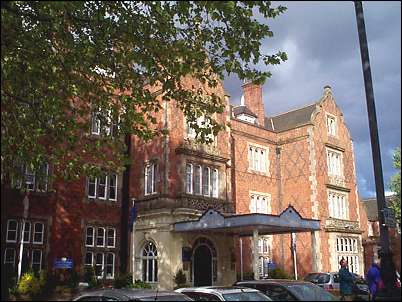
The battle for the town hall The new Stoke-on-Trent county borough Council met for the first time on Thursday, March 31st 1910. By the direction of the Local Government Board, who had in view the controversial question of the centre of government, the inaugural meeting took place on neutral ground at the North Stafford Hotel, Stoke. Major Cecil Wedgwood presiding as Acting Mayor of the new Borough. He was elected first Mayor and served in 1910, 1911.
Geen's monument Although Geen proposed and supported the federation of the towns of Stoke, Fenton and Longton - he did not want it to be extended to the other towns - he thought that such an extension would be taken over by the much bigger town of Hanley, because of this fear he became a "bitter anti-federationist".
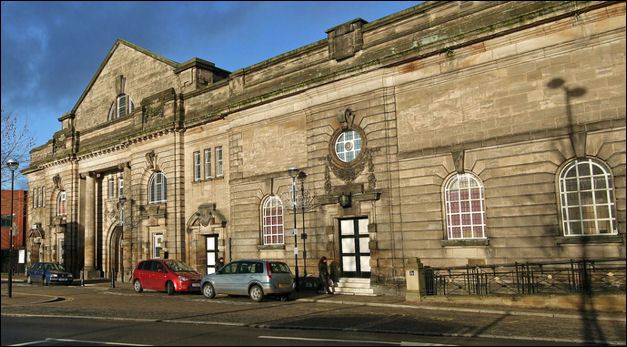
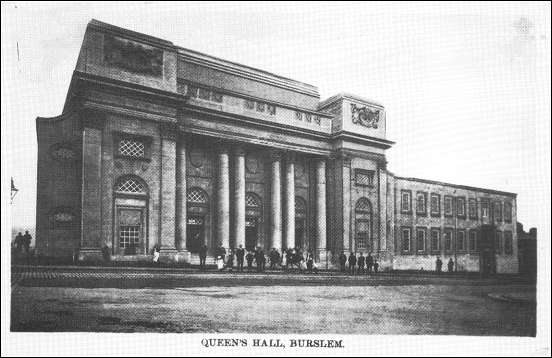
Malkin's Folly Malkin was in favour of federation but he resigned from the federation committee of the Burslem council because of its anti-federation majority.
Against opposition Malkin pushed through
the building of a new (Burslem's third) town hall - it was hoped that
this would be the municipal centre of the anticipated federation
(because of Burslem's position as 'The Mother Town').
|
next: Frederick Geen - a bitter
anti-federationist
previous: What is Federation?
contents: Index page for
Federation