|
|
|
|
|
Stoke-on-Trent - Potworks of the week
|
The Foley Potteries
| Over time business at the
Foley Potteries changed hands from the original Elkin and Knight
familes to Wileman and then ultimately the Shelley family.
As always with the changes in partnership the dates are approximate. Sometimes there is an announcement in the London Gazette and so a more accurate date is known.
|
| 1822-26 Elkin, Knight & Co; Elkin, Knight & Elkin John King Knight and his brothers-in-law Thomas and George Elkin established a pottery manufacturing business in an area called "The Foley" which lies between Fenton and Longton. 1827-40 1840-47 1847-53 1853-56 1856-64 1864-69 1869-92 1872-1925 1925-65 1965-66 |
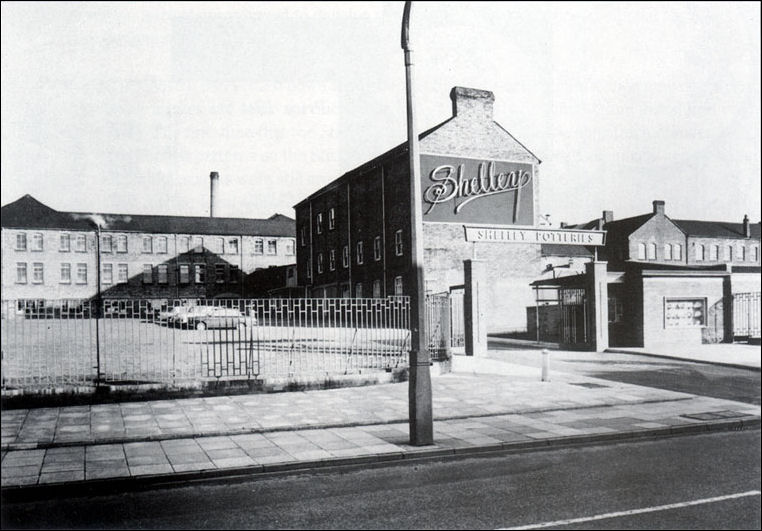
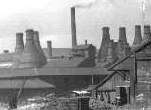
Shelley Potteries Works,
Foley, King Street, Fenton
Shelley continued in production until
1966 when it was taken over
by Allied English Potteries, which became part of The Doulton Group
photo: Geoff Evans
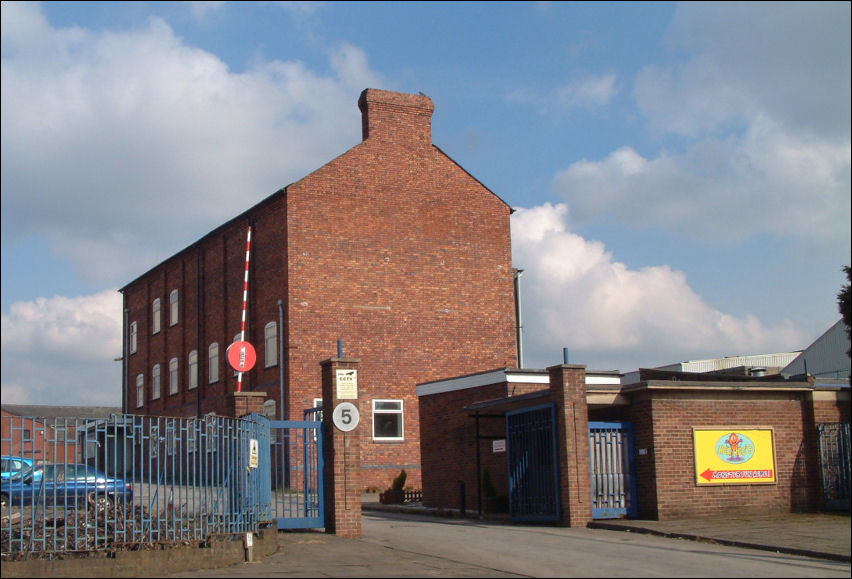
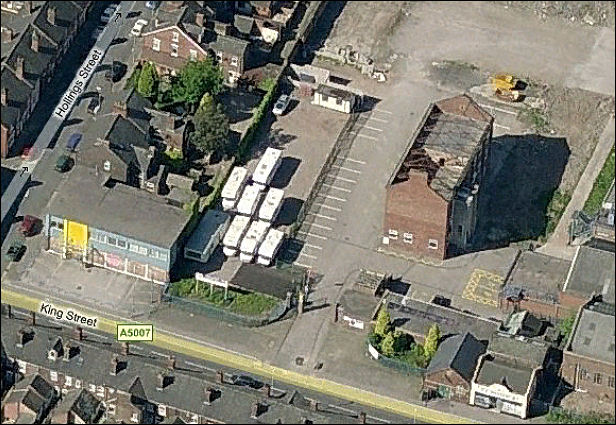
March 2009 photo of the old
Shelley’s factory
|
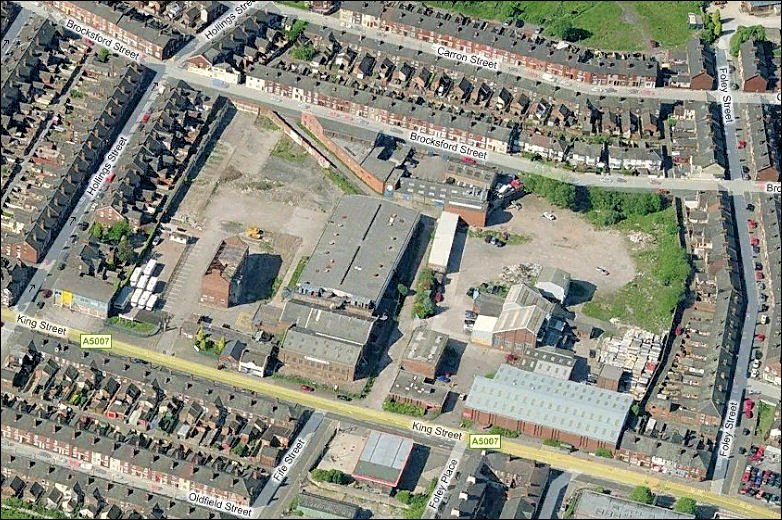
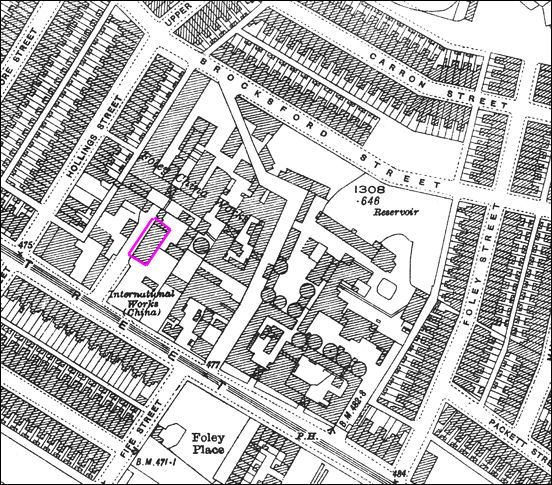
This March 2009 photo of the old Shelley’s factory (formerly Wileman’s) depicts the building still standing (though roofless) to the north of King Street in Foley. Next to the Shelley factory the Foley Works of Goodwin, Stoddard & Co., as was (the now demolished row of buildings at the back may belong to this works?). This seems (since the demolition of the Old Foley works in 2006) to be the only one of the main buildings of the various Foley pot works left.
photo: Mar 2009 MS Live Earth
Shelley Potteries started life as Wileman & Co when, in 1862, Joseph Ball Shelley was taken into partnership with the firm of Henry Wileman at the Foley China Works, Fenton, Staffs. Over the years, Wileman & Co was a melting pot for many important designers such as Micklewright, Rowland Morris, Frederick Rhead and Walter Slater.
|
|
|