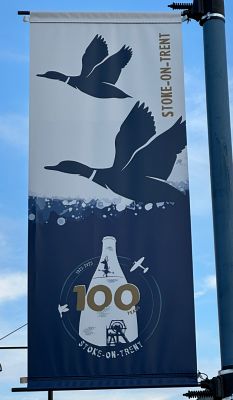
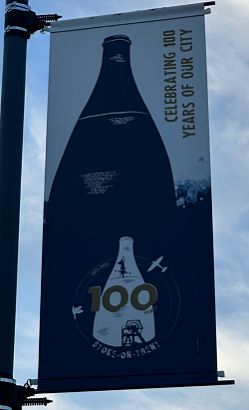
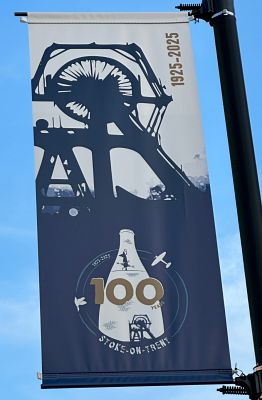
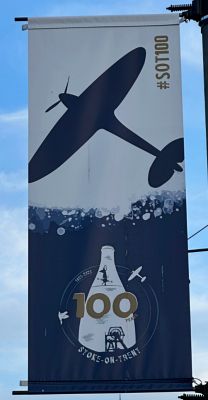
Although officially one of Britain’s youngest cities, the history of Stoke-on-Trent stretches back many centuries. The area developed through the growth of the pottery industry, coal mining, ironworking and canal transport, with six historic towns — Burslem, Fenton, Hanley, Longton, Stoke and Tunstall — gradually expanding and merging during the nineteenth century. In 1910 these towns united to form the County Borough of Stoke-on-Trent, creating what became known across the world as “The Potteries”.
The granting of city status by King George V in 1925 recognised both the importance of the local pottery industry and the national significance of Stoke-on-Trent as a centre of manufacturing, craftsmanship and export. By this time, the city’s ceramics were already internationally renowned, with names such as Wedgwood, Spode, Minton, Doulton and Aynsley helping to establish Stoke-on-Trent as the world capital of ceramics.
Yet the story of the city is about far more than pottery alone.
-
Stoke-on-Trent grew from a landscape of villages, farms, collieries and market towns into a place shaped by industry, migration, transport and community life.
-
The Trent and Mersey Canal transformed trade and communication during the eighteenth century, while the arrival of the railways accelerated industrial growth during the Victorian era.
-
Generations of local people worked not only in potbanks, but also in mines, steelworks, brickworks, engineering works and countless smaller industries which supported the local economy.
The city’s identity has also been shaped by its people and traditions. From local dialect and football rivalries to chapels, pubs, parks and street celebrations, Stoke-on-Trent developed a distinctive character recognised well beyond Staffordshire. Communities endured economic hardship, wartime losses and industrial decline, yet continued to preserve a strong sense of identity and pride in their local area.
The centenary year provided an opportunity to reflect upon the history of the city and the people who built it.
And a chance to celebrate the achievements of modern Stoke-on-Trent — its cultural life, heritage attractions, creative industries, sporting traditions, universities, businesses and communities — while looking ahead to the future.