|
|
The Saxons in
Stoke-on-Trent
Mercia, early settlements and the wider Saxon landscape
|
The Saxons in Stoke-on-Trent Long before the rise of the famous pottery industry, the area around Stoke-on-Trent was already an established settlement within the Anglo-Saxon Kingdom of Mercia. During the 7th to 9th centuries this part of Staffordshire was linked to a wider Saxon world of villages, churches, royal power and trade routes. The name Stoke itself is of Old English origin, probably derived from stoc, meaning a place, meeting point, or religious settlement, suggesting that this was already an important location more than a thousand years ago. Local Saxon remains, together with the nearby Staffordshire Hoard and the magnificent Sandbach Crosses, reveal a fascinating chapter of the area’s early history. |
|
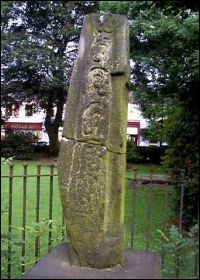
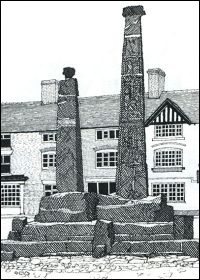
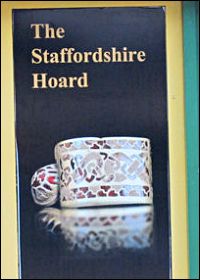
Mercia and the wider Saxon landscape During the 7th to 9th centuries, the area around present-day Stoke-on-Trent lay within the powerful Anglo-Saxon Kingdom of Mercia, one of the dominant kingdoms of early medieval England. This was not an isolated rural district, but part of a wider political, religious and trading landscape that stretched across Staffordshire and into neighbouring Cheshire. One of the most remarkable discoveries from this Mercian world is the Staffordshire Hoard, found in 2009 near Hammerwich, about 40 miles south of Stoke-on-Trent. The hoard, consisting of thousands of pieces of finely worked gold and silver, dates mainly from the 7th century and reveals the extraordinary craftsmanship, wealth and military culture of the Mercian elite. Some of the collection is now displayed locally at The Potteries Museum & Art Gallery. A further link to the Saxon world can be seen at the famous Sandbach Crosses, two richly carved stone crosses dating from the early 9th century. Standing in the market square at nearby Sandbach, they are among the finest surviving examples of Anglo-Saxon sculpture in Britain and provide powerful evidence of the religious and artistic influence of Mercia across the region. |
|
Early Settlements and Place Names Place names are among the strongest surviving links to Saxon Stoke. Long before the modern city emerged, these names recorded the farms, settlements and gathering places of the early Mercian landscape. Today, names such as Stoke, Tunstall, Burslem and Bucknall still carry echoes of their Anglo-Saxon origins. Stoke - from Old English stoc, meaning a place, meeting point, crossing, or place of worship - it perhaps marked a crossing point on an old Roman road. Tunstall - from tun (enclosed settlement or farmstead) and stall (place for cattle) Burslem and Bucknall - these names often incorporated the names of Anglo-Saxon chiefs (thegns) who founded or governed the homesteads |
|
These discoveries and place names show that Stoke-on-Trent was already an established part of the Mercian landscape centuries before the rise of the pottery industry. |