|
Sampson
Hancock (& Son |
    |
Location and period of operation:
|
S Hancock & Sons |
Stoke |
1891 |
1935 |
|
S Hancock & Sons (Potters) |
Hanley |
1935 |
1937 |
|
Earthenware manufacturer at Bridge Works, Stoke, Stoke-on-Trent. One source records that around 1920 china manufacture was commenced.
Factory Locations:
|
Previously: Benjamin & Sampson Hancock
Wolfe Street
(off Church Street)
Stoke

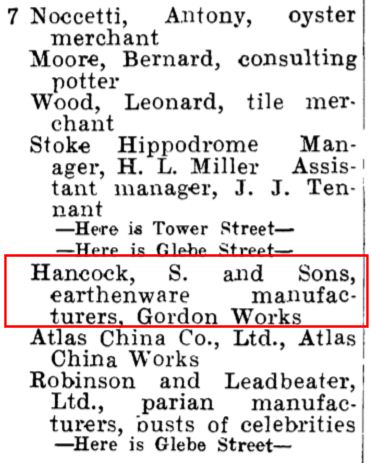
Hancock, S and Sons,
earthenware manufacturers,
Gordon Works
from..... 1907
Staffordshire Sentinel
'Business Reference Guide to The Potteries, Newcastle & District'
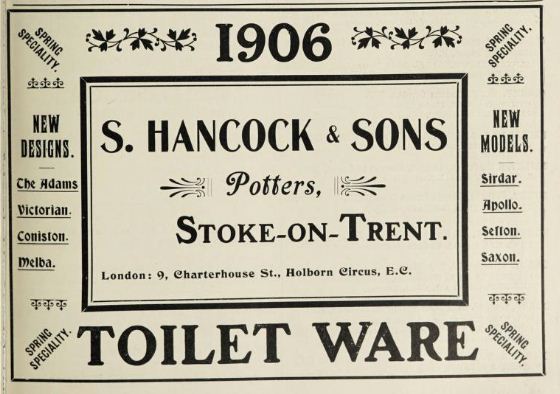
S. Hancock & Sons
Potters
Stoke-on-Trent
Pottery Gazette - January 1906
|
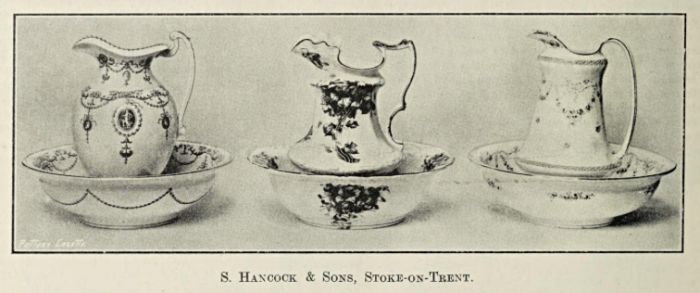
"S. Hancock & Sons, potters, Stoke-on-Trent, have been known for half a century as manufacturers of toilet ware, dinner ware, flower-pots, vases, &c., in high-class semi-porcelain and ivory ware. They have just brought out some special lines in toilet ware for the spring trade, and samples of them are now on show at the rooms of their London representative, Mr. J. J. Adams, of Charterhouse-street, E.C. Amongst them are several original models ornamented with quite new designs. One of the best of these novelties is the "Saxon" shape. The contour of the ewer is beautiful in its simplicity. The body of the ewer is nearly oviform with plain surface. Amongst other decorations is one in the pure Adams style with figures in medallions suspended from wreaths. This is an artistic ornamentation, the effect of which is enhanced by the quiet enamelled colours. It has a round, deep bowl with slightly flanged rim. The inside of the bowl is ornamented in keeping with the ewer, while simple festoons adorn the outside. The “Saxon” ewer and basin are at the left of the group illustrated. The "Sirdar" is shown on the right. This also is a plain surface, free from embossments and a plain handle formed in one curve from the top of the ewer to near the foot. The decoration shown consists of festoons and small flowers and gilt. This shape is also on show in several other decorations, some floral and others in shaded colours. The “Apollo” shape has neat embossments, and is shown in several enamelled patterns. There are several pleasing new patterns in dinner ware. The “Cecil” has a relief decoration on blue border. The “Hampton” dinner service has a neat serrated border, and is ornamented with enamelled and gilt patterns. The samples on show include numerous printed, enamelled, and japan decorations in various shapes. The range of flower-pots is a wide one, and there are several recent additions. The "Dragon" flower-pot is in three sizes, and is decorated in panels. The miscellaneous goods include all things usually for table use, made in earthenware - cheese-stands and covers, biscuit boxes, bread trays, fruit dishes, trinket sets, &c. Messrs. Hancock & Son are makers of all descriptions of C.C. ware, for which they claim special durability."
The
Pottery Gazette, March 1 1906, p320 |
Khang He Ware
|
As well as typical practical household ware such as toilet sets and table ware, Sampson Hancock & Sons introduced ware featuring Chinese-inspired patterns, particularly the "Cheng" pattern, often marked "Khang He" or "Khang" as a phonetic spelling of the Chinese Kangxi period (1662-1722) - a popular era for original porcelain designs. The reproduction designs appear to have been introduced in 1913. An article in the Pottery Gazette of December 1913, which was detailing ware carried by various retailers across the country, carried the following sentence:
|
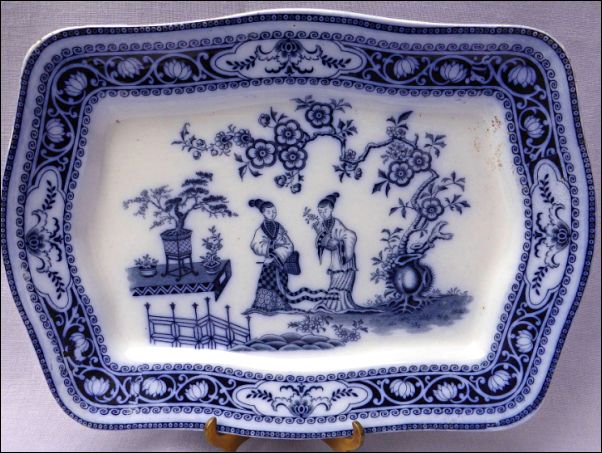 serving platter in the blue and white Chêng pattern |
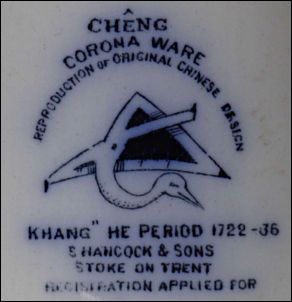 Chêng Corona Ware Reproduction of Original Chinese Design "Khang" He Period 1722-36 S Hancock & Sons Stoke-on-Trent Registration applied for |
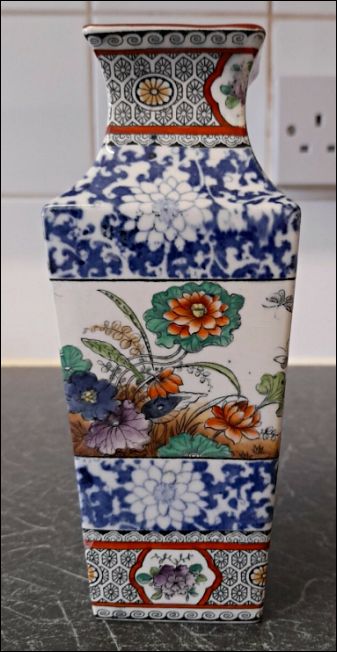
This Sampson Hancock vase is a reproduction of a Chinese porcelain piece in a distinctive square (fang) shape with slightly flared neck and base, typical of traditional designs. The body features alternating panels with broad sections of underglaze blue-and-white chrysanthemum-like flowers which are interspersed with vibrant polychrome reserves depicting colorful lotus flowers (in shades of red/orange, green, purple, and blue), foliage, grasses. The
panels are divided with pained bands and the bottom and top panels have a
geometric background. |
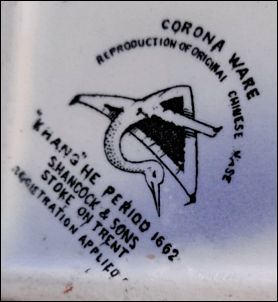 Corona Ware Reproduction of Original Chinese Vase "Khang" He Period 1662 S Hancock & Sons Stoke-on-Trent Registration applied for
There appears to have been
three designs reproduced by Hanock & Sons, two blue-and-white 'Chêng'
and 'Lotus' and one polychrome design which has no name. - Wikipedia article on Kangxi porcelain -
|
Company History:
The company was founded by Sampson Hancock, a prominent Wesleyan, in 1857 and was renamed S. Hancock & Sons (Potters) Ltd. in 1935. . Sampson Hancock died on 9th May 1900 and was succeeded in the business by his sons, Jabez, Harry and Arthur. They produced tablewares and fancies for the popular market - its main income being from semi-porcelain and earthenware tablewares, toilet wares, vases and vitreous hotel wares. Many of the products, including ironstone china, were for export markets.
After WW1 the company increased its production of ornamental and decorative wares. These included children's wares and doll's heads. Boxed teasets for children were being produced by 1917 featuring popular nursery rhymes and pictures of children. Two designers of this type of ware were Molly Hancock and Edith Gater (see Designers below).
The company also produced a range of crested wares, these being marked with the trade name The 'Duchess' China or The 'Corona' China and Grosvenor Ware. These may have been produced in quantity to see the company through the war years when skilled labour was unavailable. Pieces included animals, small decorative dishes and Great War commemoratives, or had English or Welsh crests. Crested ware appears to have been made until the 1920s.
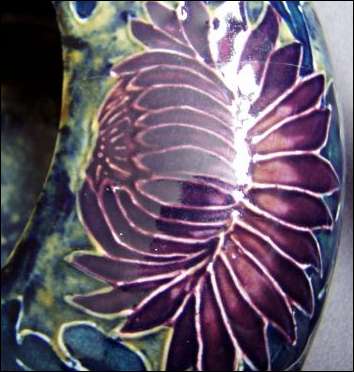
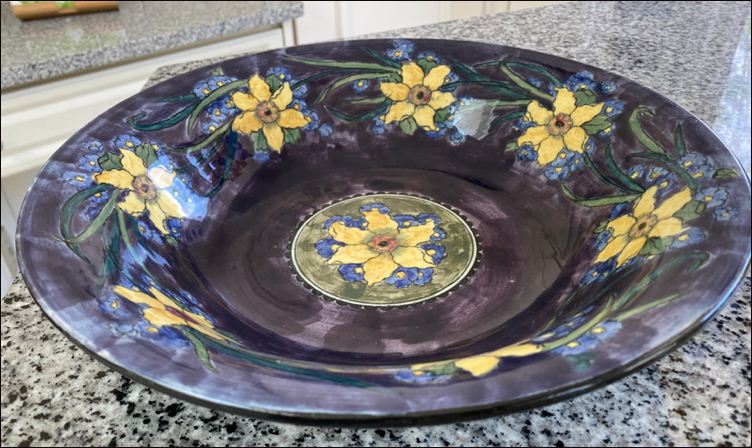
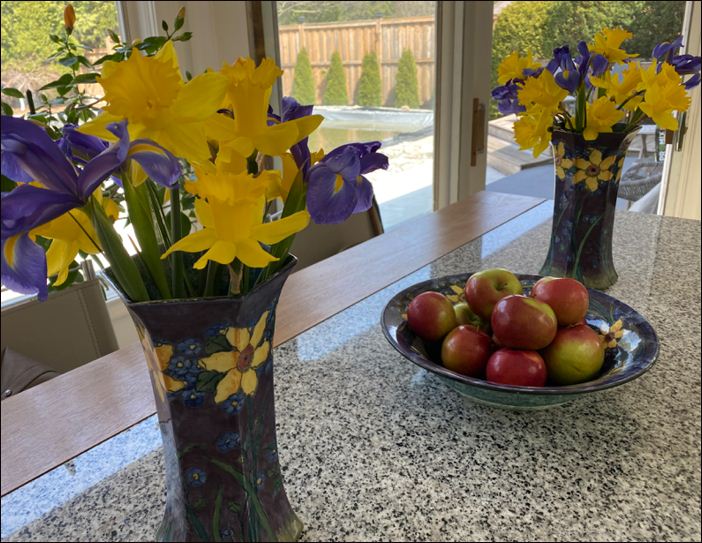
- One of the main decorative ranges produced by the company was Morris Ware. This included many tube-lined patterns which resembled the Moorcroft productions and may have been intended to compete with that company. George Cartlidge was the first designer of this type of ware but the range continued with other designers. Morris ware was much praised in the trade press of the time which noted that foreign buyers at the British Industries Fair had shown interest in the range and it is now actively collected.
Tube-lined Morris Ware
Designers and Artists:
The company employed many different
designers who each produced new ranges of wares and frequently signed their
wares.
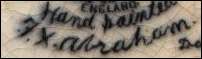
| Francis Xavier Abraham
- Art Director in the 1920s. Responsible for
the introduction of Rubens Ware and Titian Ware, and later designs of
the Morris Ware range. Previously Art Director of W.T. Copeland & Sons late Spode.
|
 |
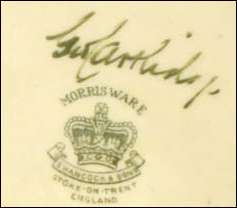
| George Cartlidge
- Trained at Hanley School of Art (1878) and taught art before working
for Sherwin & Cotton (1882-1900) and then setting up his own
company Adams & Cartlidge (Ltd.). Both these companies specialised
in the production of tiles. He worked for Hancock's c. 1918-1926
designing Morris Ware. He later worked on his own from a studio at his
home in Rudyard and in America.
|
 |
| Edith Gater (nee Smith)
- 1930s. produced tube-lined wares.
Other patterns include
Springtime. Also contributed designs to the Morris Ware range. Later worked for Cauldon Potteries designing tube-lined wares. During the war left pottery to do war work and afterwards went to work at Thomas Cone.
|
|
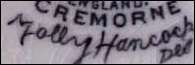
| Molly Hancock - youngest daughter of Jabez Hancock. Designed children's ware, including Elf and Bunnies and Little Bo Peep. Patterns included Cherry Ripe and Cremorne. |
 |
 |
|
 |
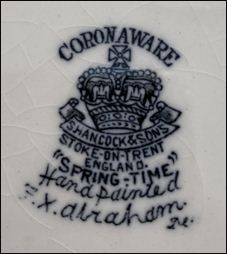 Coronaware S Hancock & Sons Stoke-on-Trent England "Spring
Time" (designer) |
photos courtesy: Pam Scott
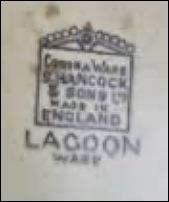
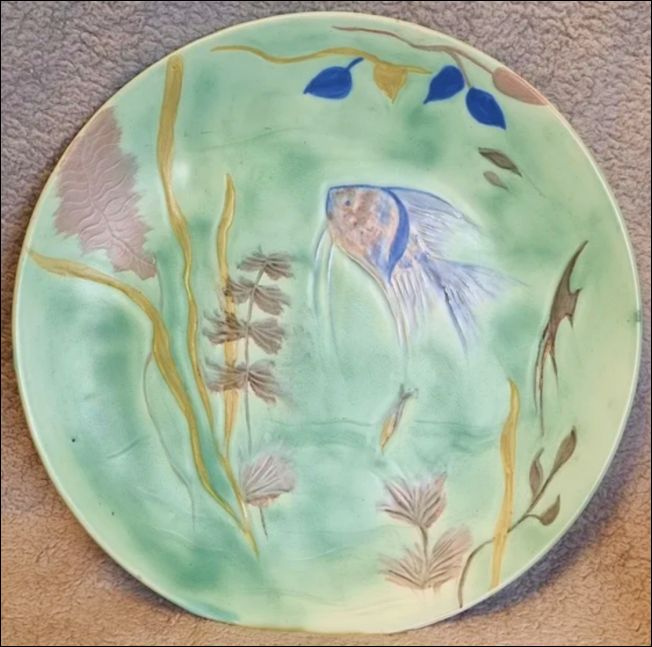 large charger or wall plate in the Lagoon pattern
|
Lagoon Ware
|
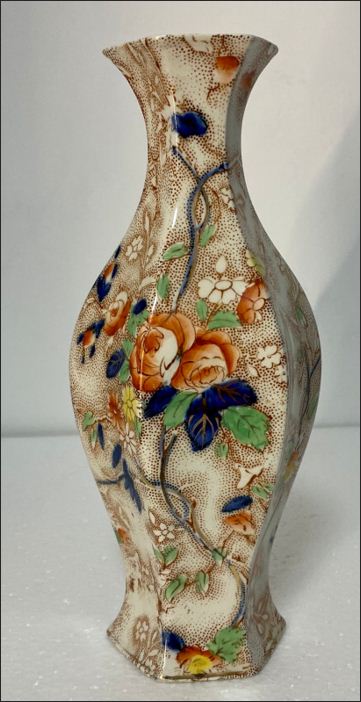
photos courtesy: Jim Coates |
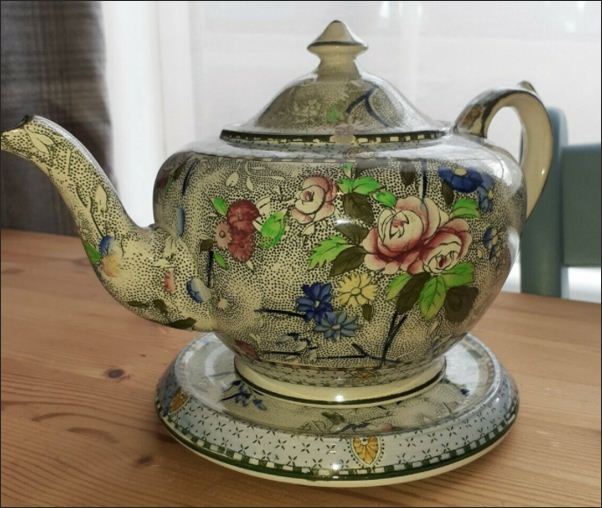
1912-1937 |
Gaudy Welsh
The patterns
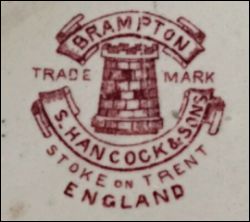
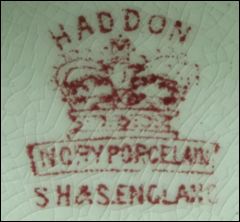
Brampton & Haddon are based on the Chrysanthemum Style of Gaudy Welsh
the pattern Leighton has similar pattern elements but in a smaller style
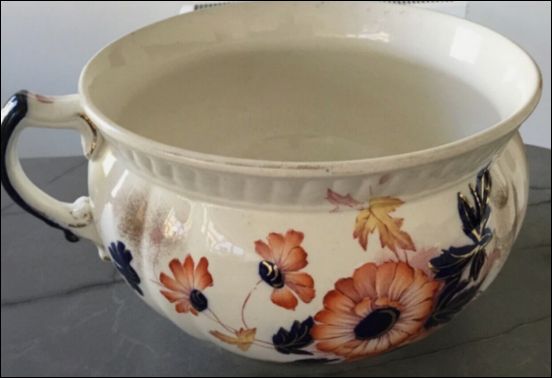 Chamber pot in the Brampton pattern this pattern was also produced in a monochrome design
|
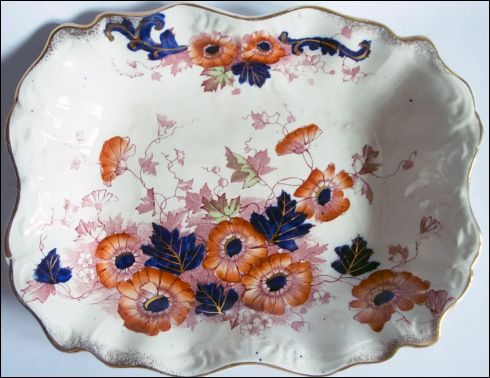 Serving plate in the Haddon pattern
|
Leighton
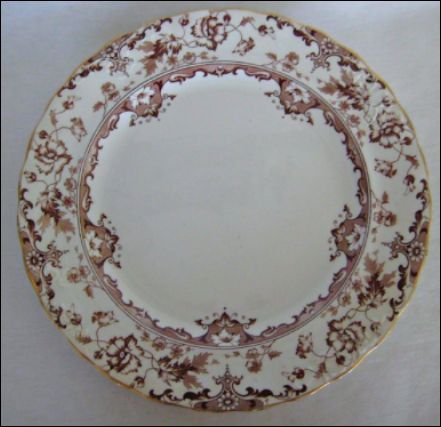
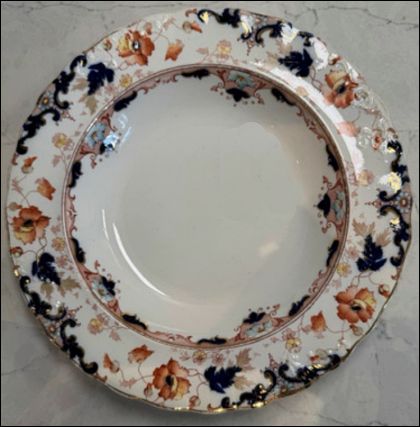
Leighton was a popular dinner
ware pattern produced in mono and polychrome
it was in production from 1897 through to 1935
the registration number
300714 shows that the pattern was
registered on the 24th June 1897 to S. Hancock & Sons, Stoke
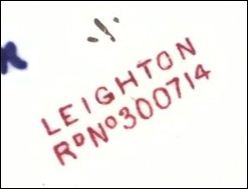 Leighton Rd No 300714 1897-1906 sometimes this mark is mistaken for that of Bourne & Leigh or Leighton Pottery Ltd who operated at the Leighton Pottery in Burslem. |
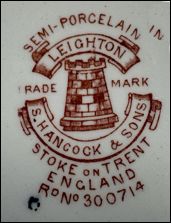 Semi-Porcelain Leighton S. Hancock & Sons Stoke-on-Trent England Rd No 300714 1906-1912 |
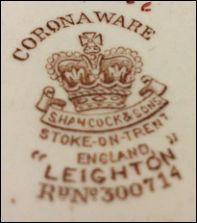 Corona Ware S. Hancock & Sons Stoke-on-Trent England "Leighton" Rd No 300714 1912-1935 |
Cromer
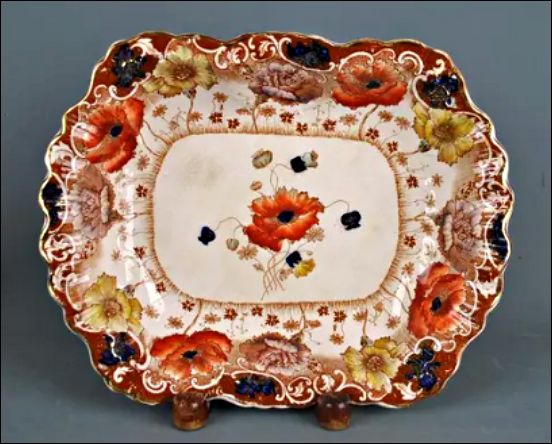 Serving dish in the Cromer Pattern |
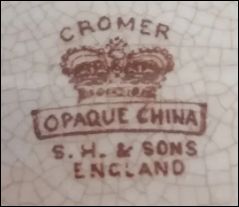 Opaque China S. H. & Sons England |
|
The Cromer pattern is a floral design consisting of poppies generally with an ornamental border of leaves and curved flourishes. A range of washroom / toilet ware was produced in this pattern as well as serving dishes, large bowls / planters and Jardinières. The pattern is generally hand coloured with cobalt blue banding or accents and in Imari and Gaudy Welsh colours. The pattern was also produced in blue & white transfer. The pattern name 'Cromer' derives from the Norfolk costal town of the same name. Cromer became a resort in the early 19th century, with some of the rich Norwich banking families making it their summer home. In 1883 the London journalist Clement Scott went to Cromer and began to write about the area. He named the stretch of coastline "Poppyland", and the combination of the railway access and his writing in the national press brought many visitors. The name "Poppyland" referred to the numerous poppies which grew (and still grow) at the roadside and in meadows. |
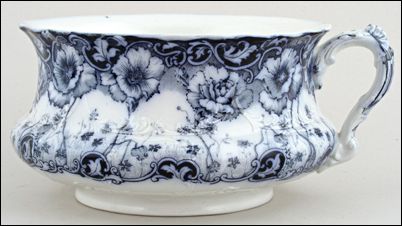 blue & white chamber pot source: Lovers of Blue & White |
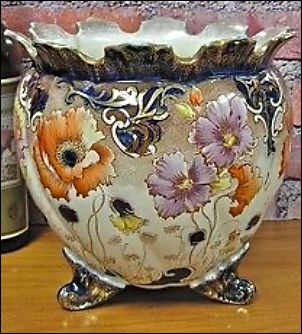 Jardinière with silver accents |
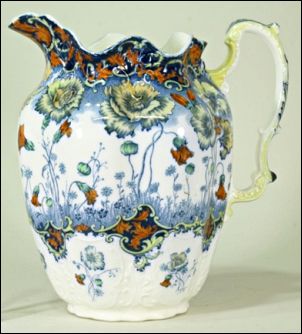 water jug from a toilet / wash set source: eHive |
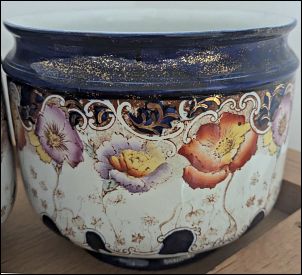 bowl / planter source: Jon Pamplin |
all these items are marked with the Cromer pattern name
Hancock's Ivory Ware
|
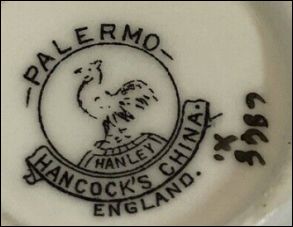
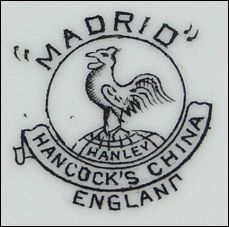
Hancock's Ivory Ware was a line of good quality, decorative, hand-painted, and designer art deco and other contemporary patterns. Probably introduced in 1923 and continued until the business closed in 1937. |
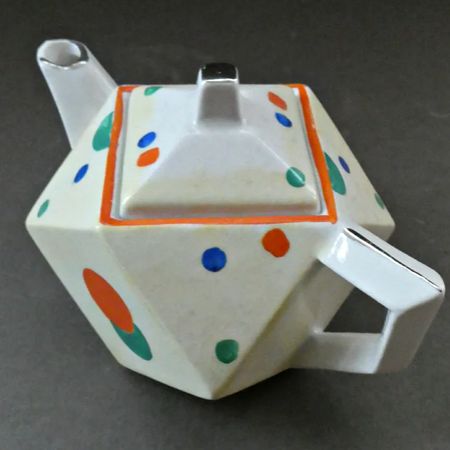
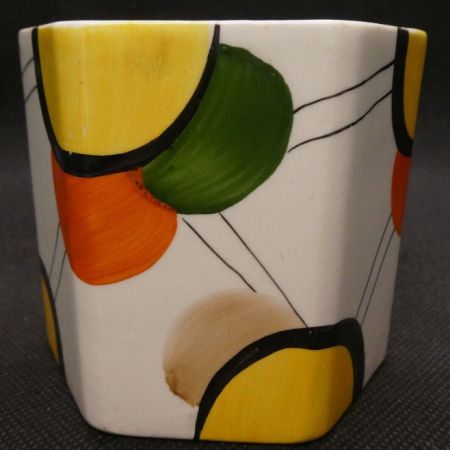
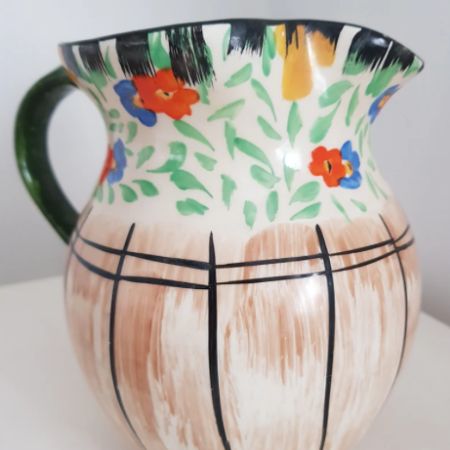
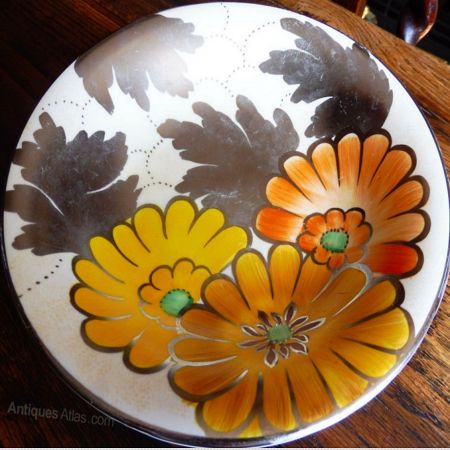
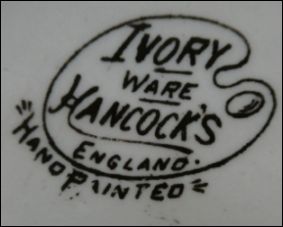
Ivory Ware
Hancock's
England
Hand Painted
Hanley
1935-37
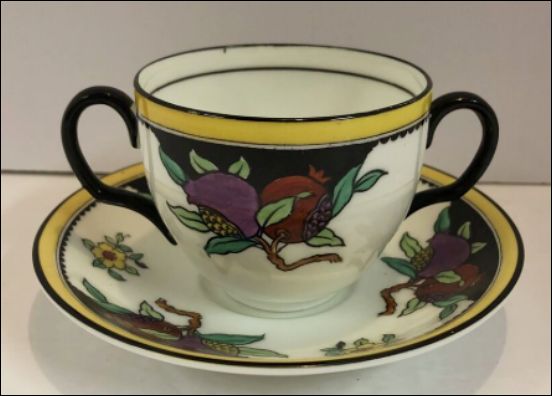 soup bowl and saucer in the Palermo pattern
|
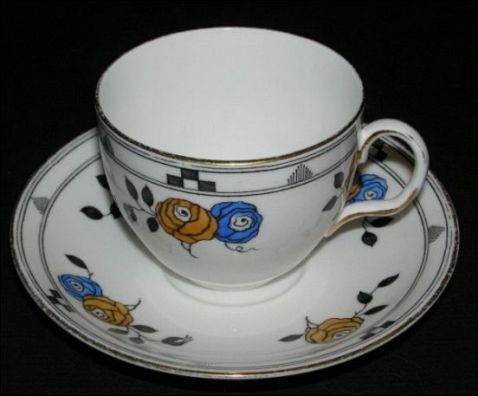 tea cup and saucer in the Madrid pattern
|
Hancock's
China
Hanley
England
1935-37
|
In 1935 the business was restarted as S Hancock & Sons (Potters) Ltd. and moved from their works in Stoke to the nearby town of Hanley. The restarted company was not a success and it finally closed in 1937. |
Sampson
Hancock & Sons (Potters) Ltd - Brochure 1935
- click
for details of the brochure -
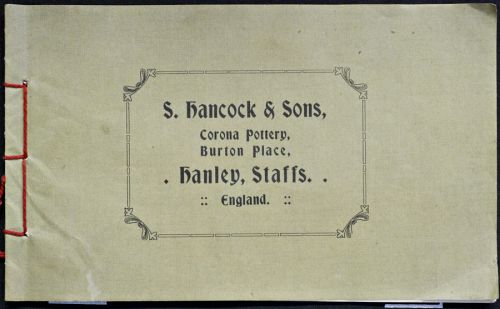
Brochure issued by Sampson Hancock & Sons in 1935
Initials & marks used on ware for identification:
S.H.
S. HANCOCK
S H & S
S H & SONS
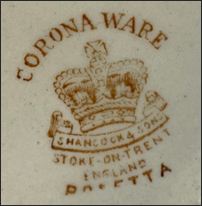
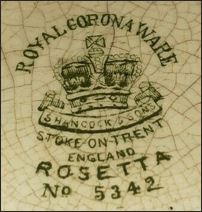
Corona 1898-
Duchess China 1911-
Grosvenor Ware
Royal Coronaware 1912-1937
Ivory Ware
Morris Ware
Rubens Ware
Titian Ware
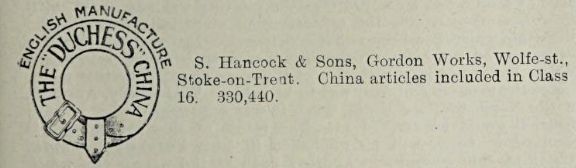
English Manufacture
The "Duchess" China
Notification of an application
for a new trade mark for S. Hancock & Sons
The Pottery Gazette, May 1 1911, p571
click for more information on
the ware produced and the marks
used by S. Hancock & Son....
Questions, comments, contributions? email: Steve Birks
|
Page created 19 February 2022 Updated 14 July 2025: Details of the Brampton, Cromer, Haddon and Leighton patterns added. Last updated 6 January 2026: Examples of "Khang He" ware added. |
Some of the data kindly supplied by The City of Stoke-on-Trent Museum.