|
Minton
& Co |
    |
Location and period of operation:
|
Minton
& Co |
Stoke |
1849 |
1878 |
| Note:
Operational dates are approximate - there was often overlapping with
names & marks. The name 'Minton & Co' appears in a 1841 trade
directory.
|
|
Manufacturer of earthenware,
china, parian,
majolica at Eldon
Place, London Road, Stoke,
Stoke-on-Trent, England Thomas
Minton started the business in 1793 - since then there were many partners
and company names.
|
Subsequently: Mintons
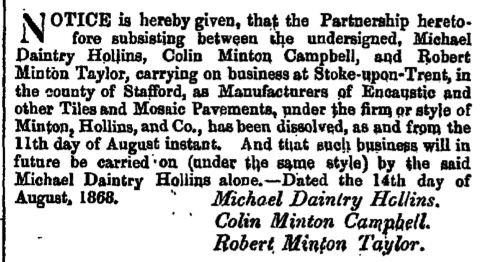
London Gazette 18 August 1868
notice of the dissolution of the tile manufacturing partnership between
Michael Daintry Hollins, Colin Minton Campbell and Robert Minton Taylor
Examples of Minton ware
Minton produced many thousands of different patterns/designs - the following are a selected few to show the range of ware.
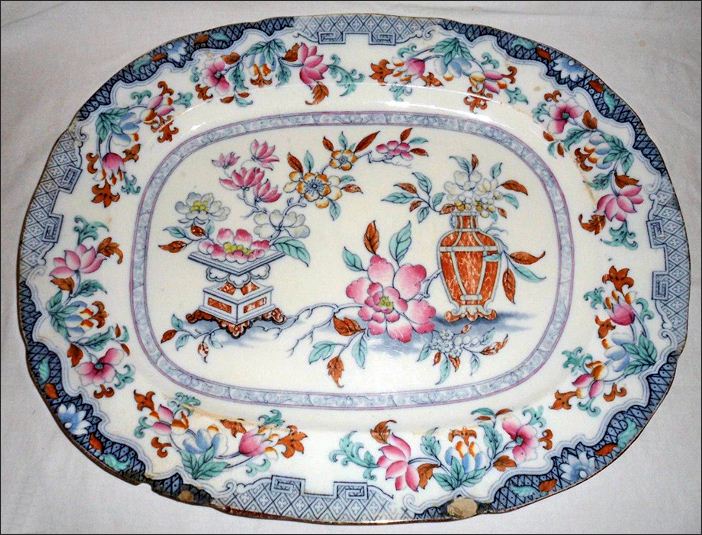 large platter in the Poonah pattern Minton & Co produced a number of variants of this pattern |
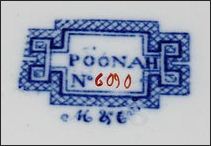 POONAH No 6090 M & Co |
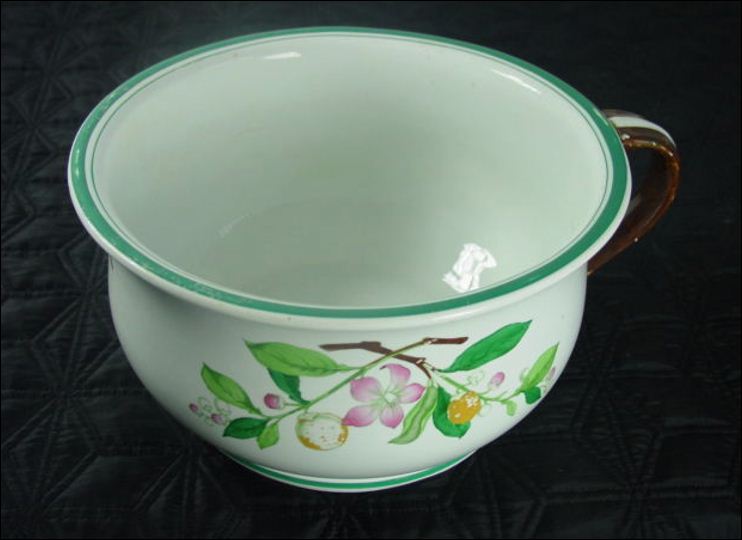
Minton & Co.
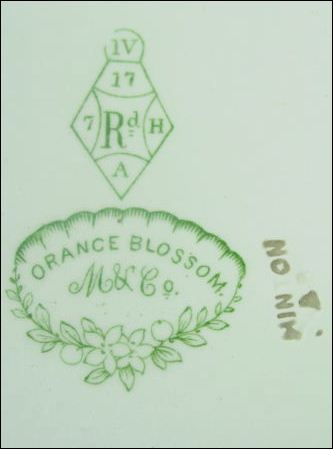
Chamber pot in the ORANGE BLOSSOM patternthe Orange Blossom pattern was registered
on the 17th December 1869
|
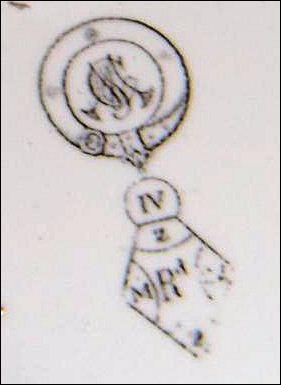
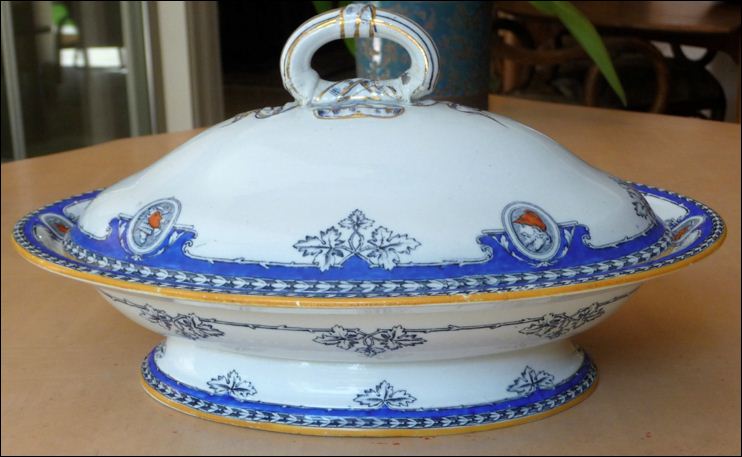
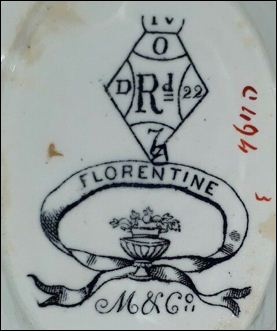
Florentine was a popular pattern
used on plates, jugs & tureens - usually |
 M & Co |
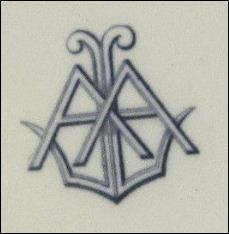
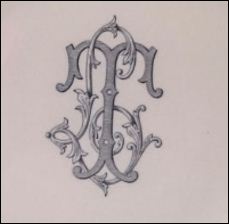
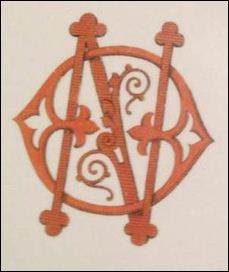
There are many example of Florentine plates produced with various
monograms printed in the centre
Minton & Co.
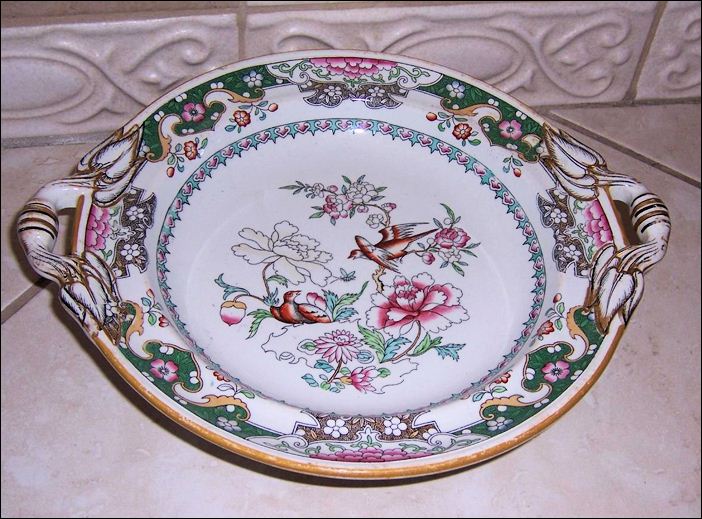
Serving plate in the BELMONT JAPAN patternnote: a number of manufacturers used JAPAN as part of a pattern name
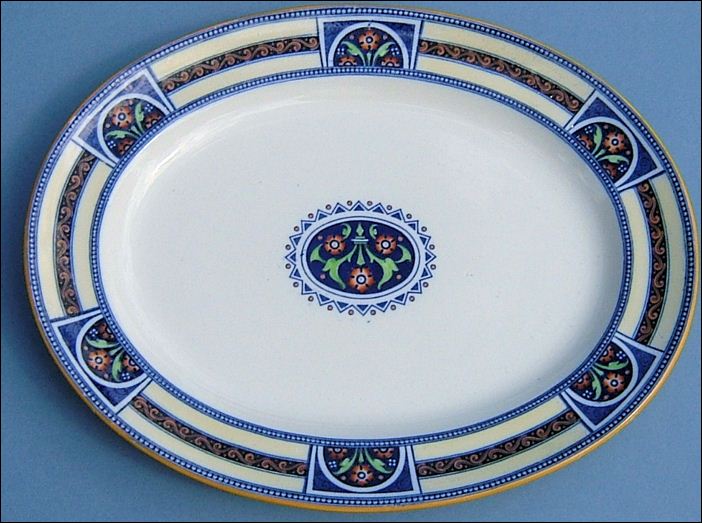
Minton & Co.
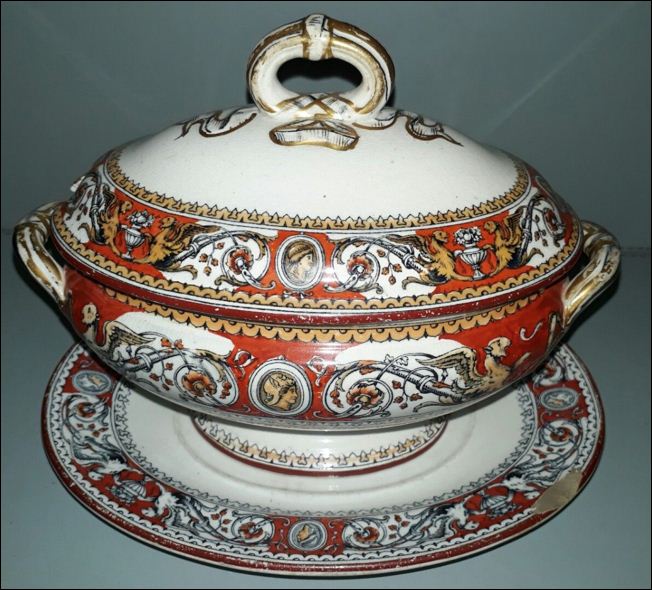
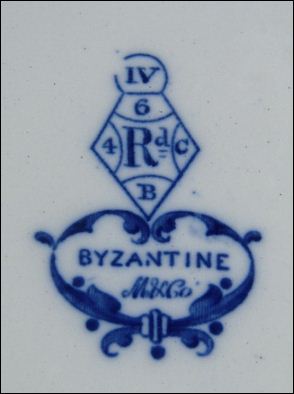
Serving plate in the BYZANTINE pattern
Ware produced 1891+
|
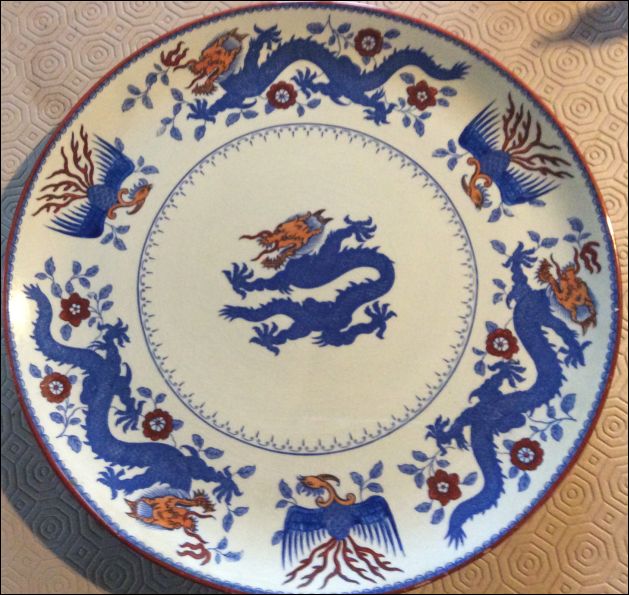
These patterns were designed and registered by Minton & Co but were produced by Mintons sometime 1891 onwards. The inclusion of the country of manufacture 'ENGLAND' was a requirement of the US McKinley Tariff Act. |
|
This design was produced in matt and gloss glazing, monochrome with gilding and polychrome styles. The pattern is alternating dragons and stylised phoenix birds with chrysanthemums |
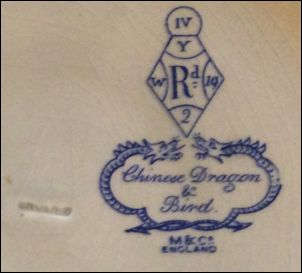 Chinese Dragon & Bird M & Co England (printed) Mintons
|
photos courtesy: Vicki Jones
|
|
Mintons
|
Initials and
marks used on
ware for identification:
M & Co
the initials M & Co are
usually printed
in script format
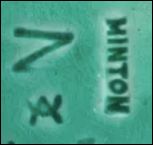
MINTON
c.1862-73 |
MINTONS
1873+ |
|
From c. 1873 the china works was known as Mintons. The two names, Minton & Co and Mintons, are often used indiscriminately. From 1879 the business traded as Mintons - for a number of years printed marks with the initials 'M & Co' continued to be used but with the addition of an impressed 'MINTONS' The inclusion of 'ENGLAND' (a
requirement of the US McKinley
Tariff Act) |
|
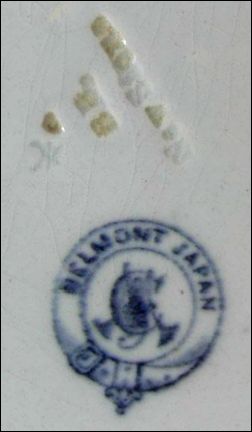
BB
BB
refers to 'Best Body' the
Belmont Japan pattern was registered |
MINTON
the
Orange Blossom pattern was registered
|
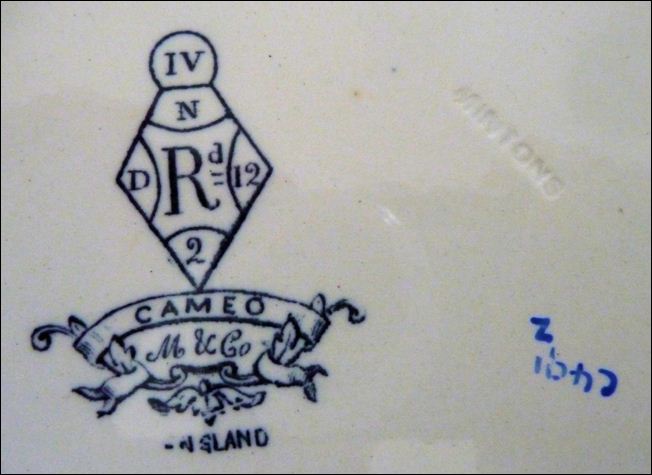
the
Byzantine pattern was registered
|
typical style of Minton & Co printed
marks used c. 1841-73
often the name of the pattern is included
sometimes the pattern
registration diamond is included
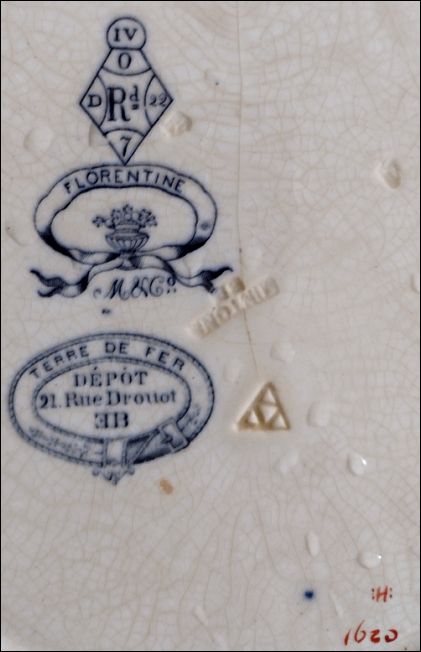
Florentine marks from 1862 to 1891+
M & Co printed mark with 'M&Co' in a script form
the
Florentine pattern was registered
|
The impressed mark is 'MINTONS' - the change to the plural name was made in 1878. The
'EB' mark and address of 21 Rue Drottot is that of |
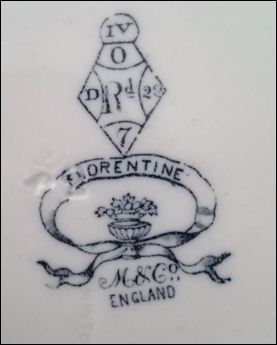 M & Co England The inclusion of 'ENGLAND' shows that the ware was made 1891 onwards
|
Impressed year cypher marks
|
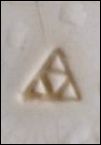
From 1842 onwards an impressed mark was sometimes used to show the year of manufacture. Very often date marks were not used, even on ware of the same pattern - there doesn't appear to have been any consistent system of use in place. |
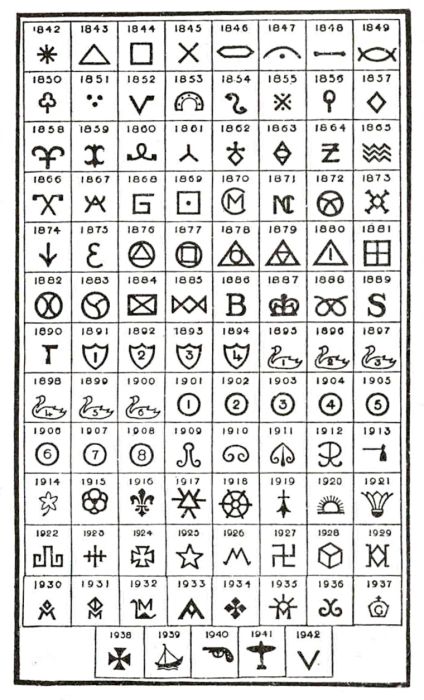
This year mark table is reproduced from the Encyclopaedia of British Pottery and Porcelain Marks by Geoffrey Godden, p.440 |
Often this marks occur in a set of three: the impressed year cypher, an impressed or painted month letter and sometimes a potter's mark.
The month letters are:
examples of year marks:
|
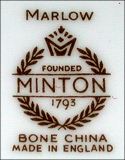
click for additional information
on Minton
Questions, comments, contributions? email: Steve Birks
|
Page created 3 July 2022 Updated 4 December 2022: Additional pattern examples added. Last updated 3 January 2026: Marks section expanded for clarity, Florentine marks added. |