|
Bucknall
& Stevenson |
    |
Location and period of operation:
|
Bucknall & Stevenson |
Cobridge |
1811 |
1816 |
|
Andrew
Stevenson |
Cobridge |
1816 |
1830 |
Earthenware manufacturer in
Cobridge,
Stoke-on-Trent, England.
|
James, Ralph & Andrew Stevenson. Potters of Cobridge
|
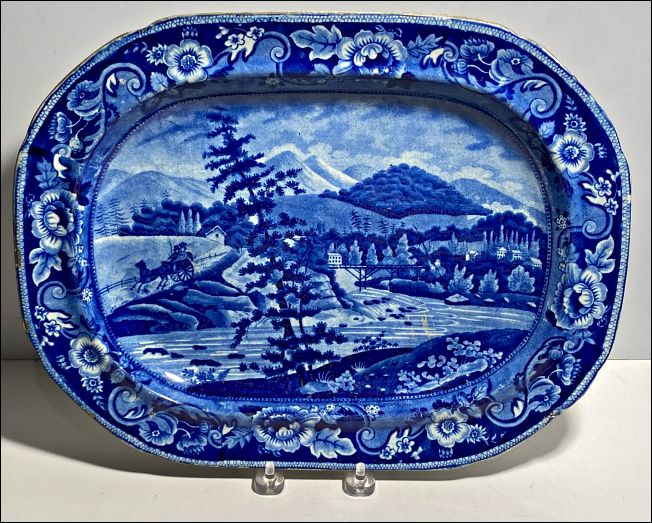
The view on this platter belongs to a class of ceramics produced in England specifically for the American market, often featuring patriotic or landscape scenes. this
view was taken from the sketch by the Irish-born William Guy Wall
|
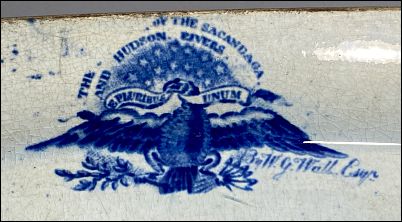
The mark shows an eagle with a shield and the Latin phrase "E PLURIBUS UNUM" - 'out of many, one' is a traditional motto of the United States, appearing on the Great Seal
|
photo acknowledgement: David M. Kurau
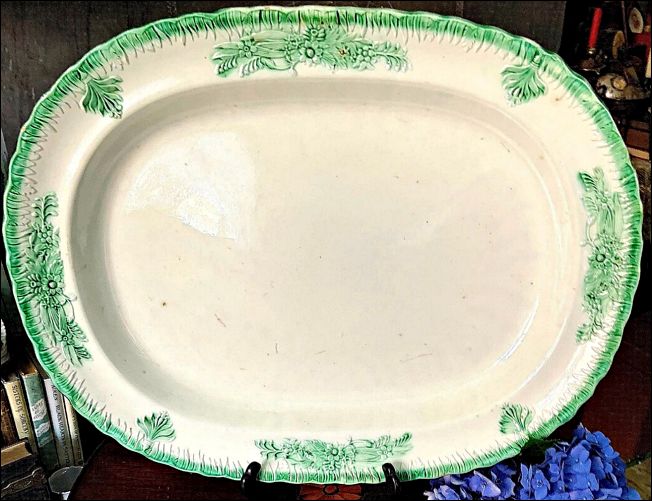 Serving Platter with Scalloped, Green Embossed Rim |
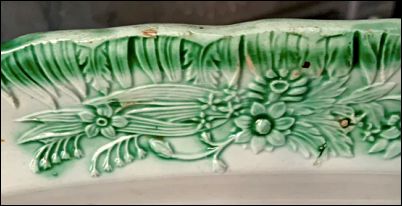 detail of the rim
(Impressed mark - |
photo acknowledgement: Etsy on-line market place
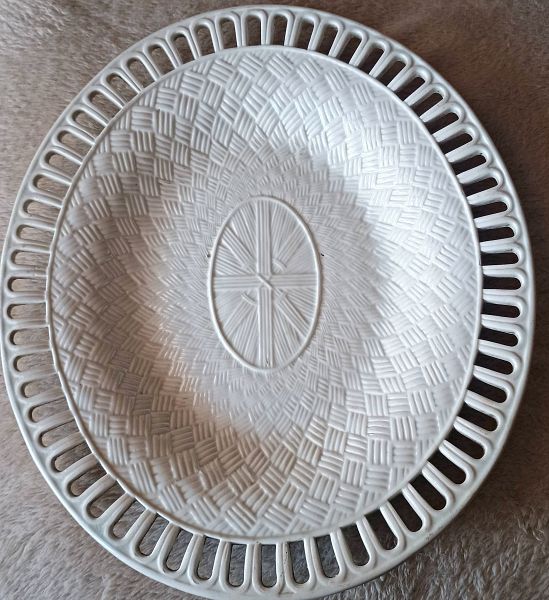 Cream-ware basket-weave design The intricate 'pierced' or openwork edges on both the bowl and plate were a signature technique of the period. Basket-weave Pattern: The exterior of the bowl and the center of the plate are embossed with a woven texture to mimic a real basket. Cream-ware was a refined earthenware developed in the mid-18th century as a more affordable, lightweight alternative to expensive Chinese porcelain. |
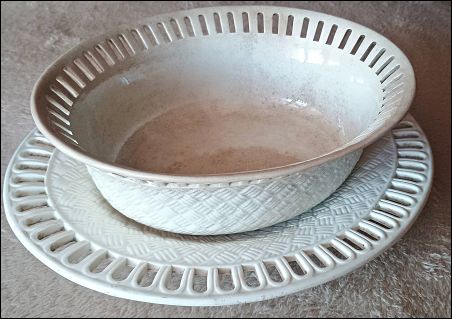
Andrew Stevenson pierced chestnut basket and base Josiah Wedgwood was also a significant manufacturer of this style of reticulated, basket-weave chestnut baskets
impressed
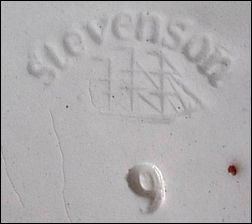
name with the typical sailing ship mark |
photos courtesy: Giovanna Francesconi
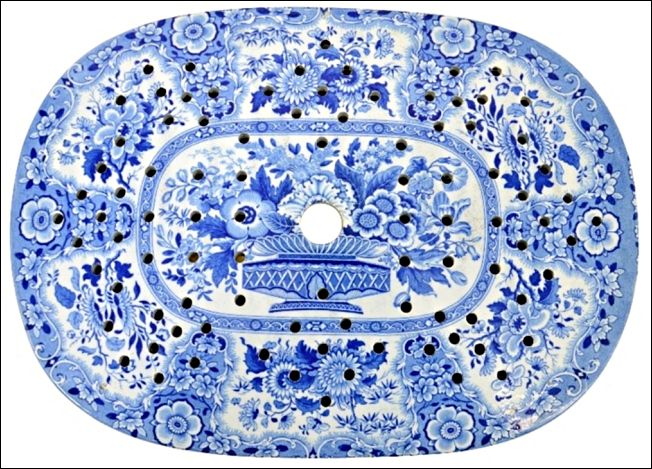 Staffordshire blue and white 'Semi Nankeen China' strainer tray transfer-printed in underglaze blue with a central basket of flowers framed in a narrow band of flowers and leaves. The remaining area occupied by a wide border divided into six panels with sprays of flowers, the intervening areas decorated with flowers against a stippled ground. |
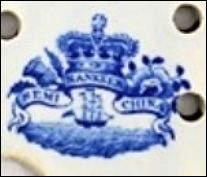 Nankeen Semi China Nankeen Semi-China typically features blue and white, transfer-printed, intricate Chinoiserie-style patterns, Manufactured by Andrew Stevenson - similar examples are associated with Minton |
photo
acknowledgement: Kinghams Auctioneers
Marks used on ware for identification:
| Early ware was unmarked -
attribution can be made by comparing the shape / pattern of the ware
with later marked examples.
No examples are known of marks from the Bucknall & Stevenson partnership. |
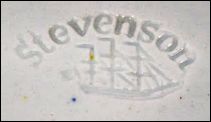 Stevenson impressed name along with the typical sailing ship mark |
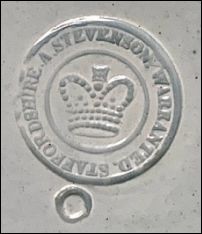
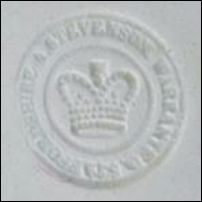 A. STEVENSON WARRANTED STAFFORDSHIRE Impressed mark |
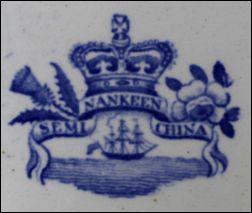 Nankeen Semi China printed mark which includes the sailing ship the Andrew Stevenson used |
c. 1816-30
Questions, comments, contributions? email: Steve Birks
|
Page created 27 March 2000 Last Updated 8 April 2025: Introduction expanded; reference made to Bucknall & Stevenson; examples of ware and marks added. |