|
This page explains the meaning and historical use of the Royal Coat of Arms, which appeared on many pottery marks in both Britain and America. The Arms were widely adopted by potters as they conveyed quality, prestige, and an implied association with royal approval, whether authorised or not.
The British Royal Coat of Arms serves to identify the Head of State. In the United Kingdom, the Royal Arms are borne only by the Sovereign.
They are used in a variety of official contexts connected with the administration and government of the country, including on coins, in churches, and on public buildings. Queen Elizabeth I (reigned 1558–1603) required that Royal Arms be displayed in parish churches, symbolising the monarch’s role as Supreme Governor of the Church of England.
The Royal Arms are also widely recognised through their use on the products of Royal Warrant holders, where they indicate a formal association with the Royal Household.
Royal Arms in an international setting
While many countries have official royal or state coats of arms, the British Royal Arms were among the most widely recognised in the 19th century and were strongly associated internationally with authority, quality, and official approval.
This widespread recognition gave the British Royal Arms particular commercial value. In the 19th century they were widely understood in export markets as a symbol of quality and official endorsement, which helped encourage their imitation and adaptation by potters in both Britain and the United States.
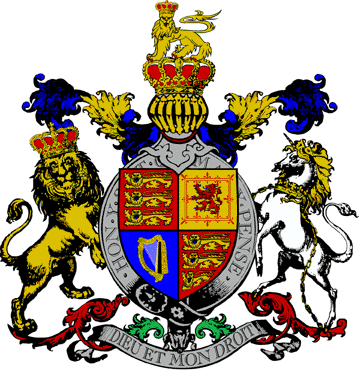
The belt surrounding
the shield bears the motto of the Order of the Garter
(an ancient order of knighthood of which the Queen or King is Sovereign)
"Hon Y Soit Qui Mal Y Pense" - "Shame to him who evil thinks."
Below
is the motto of the Sovereign
"Dieu et
Mon Droit," - "God and My Right."
The Royal Coat of Arms of the United Kingdom have evolved over many
years since the 1100's and reflect the history of the Monarchy and of
the country, the arms have remained unchanged since Queen Victoria ascended
to the throne in 1837.
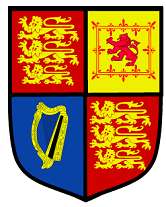
The shield shows the
various royal emblems of different parts of the United Kingdom: the
three lions of England in the first and fourth quarters, the lion of
Scotland in the second and the harp of Ireland in the third.
The shield is supported by
the English lion and Scottish unicorn.
|

