
|
Index | Pottery | Pottery manufacturers | Charles
Meigh |
    |
| [Meigh
& Walthall] 1790-1802 |
[Job
Meigh (&Son)] 1802-1834 |
[Charles
Meigh] 1835-1849 |
[C
Meigh, Son & Pankhurst] 1850-July 1850 |
[Charles
Meigh & Son] Jul 1850-Mar 1861 |
[Old
Hall Earthenware Co Ltd] Mar 1861-Jul 1886 |
[Old
Hall Porcelain Works Ltd] 1886-1902 |
Location and period of operation:
|
Charles Meigh |
Hanley |
1835 |
1849 |
|
Earthenware manufacturer at the Old Hall Works, Hanley, Stoke-on-Trent, England
|
Previously: Job Meigh & Son
Subsequently: C Meigh, Son & Pankhurst
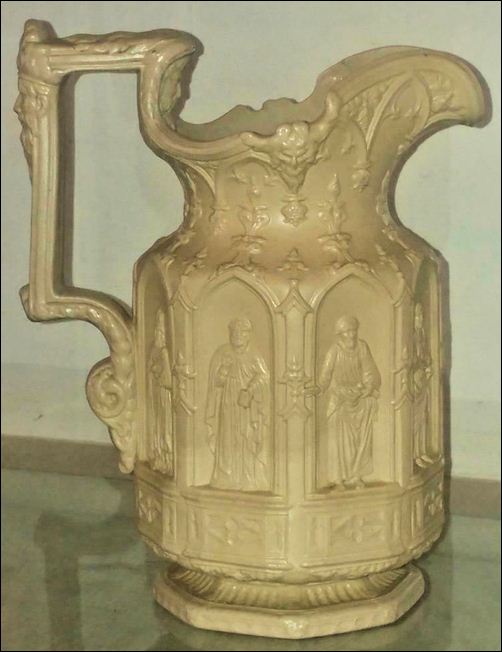
Charles Meigh smear-glazed
stonware 'Apostle jug'
c.1842
| "This jug has been relief moulded; a mass-production technique which involved one process, using elaborate plaster moulds, with no extra work required for adding decoration. Such wares could thus be produced in large numbers and were affordable and durable. Jugs, such as this one, were amongst the most widely used utilitarian vessels of the Nineteenth century; decorative as well as practical. Many different firms produced them and hundreds of different designs existed, as the competition to supply the cheap mass market was intense. Often the same design was produced in different sizes. This 'apostle' jug, in the Gothic style, is one of the most iconic and successful of relief-moulded jug designs and depicts figures in architectural niches. It has an applied registration mark on its base, which tells us that the design was logged at the Design Registry, established in 1839 to protect original work from being copied." Victoria & Albert Museum |
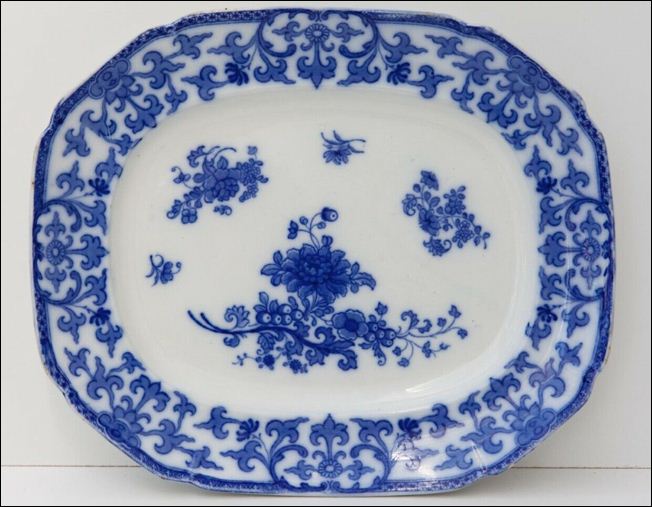
blue & white platter
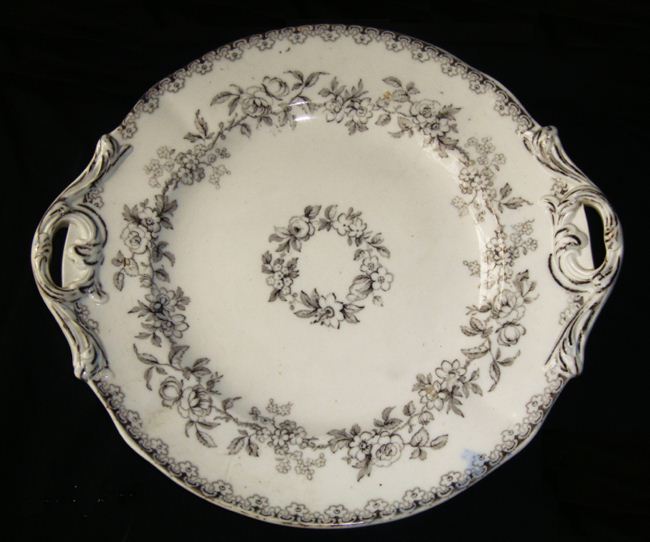 transferware charger plate |
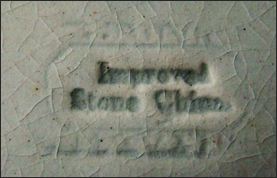 Improved Stone China |
photos courtesy: Patrick Carey
Initials & names used on ware for identification:
C M
CHARLES MEIGH
PORCELAIN OPAQUE
OPAQUE PORCELAIN
IMPROVED STONE CHINA
ENAMEL PORCELAIN
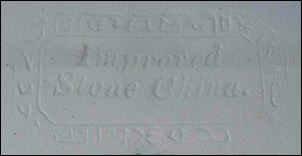
Improved
Stone China
impressed mark
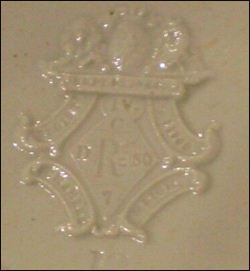
Charles Meigh
applied moulded mark
many Charles Meigh marks
incorporate the registration diamond
or the date of registration.
These marks occur on ornate moulded ware of the 1840's
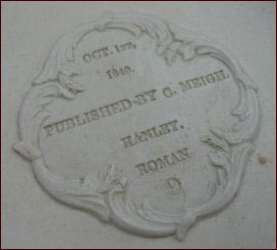
Oct 1st
1840.
Published by C Meigh.
Hanley.
Roman
applied moulded mark
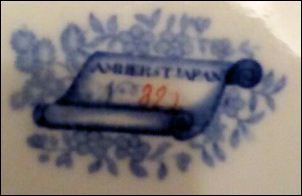
Amherst Japan
faux marks imitating those used by Chinese porcelain manufacturers
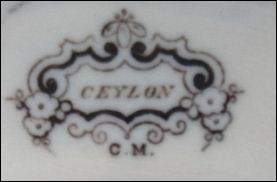
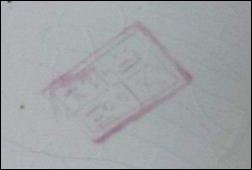
CEYLON
C.M.
these two marks appear on the same plate
'CEYLON' is the pattern name
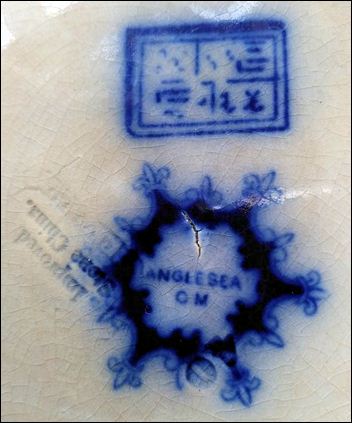
Improved
Stone China
(impressed)
C M
'ANGLESEA' is the pattern name
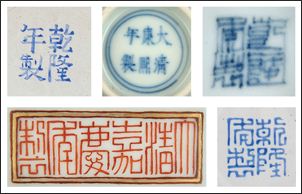
shown above are examples of
marks used by
Chinese
porcelain manufacturers
The Meigh family (& other
potters) added similar
marks to their ware to give the impression of the orient
to their ware even though it was produced in England.
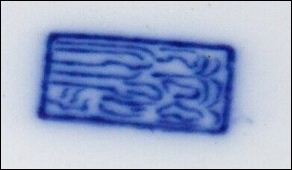
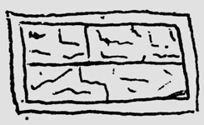
this style of mark was also used
by Job Meigh & Son and Charles Meigh & Son
 |
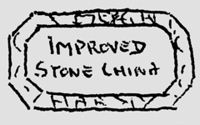 Improved Stone China around the border: Meigh Hanley other wording included "Indian Stone China" or "French China" |
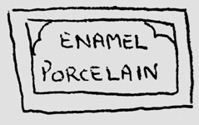 Enamel Porcelain |
marks recorded in Godden's 'Encyclopaedia of British Pottery and porcelain Marks'
these style of marks were also used by Job Meigh & Son and Charles Meigh & Son
The Old Hall Works
1790-1902
| The Old Hall Works in Hanley, Stoke-on-Trent, was one of the most significant pottery factories of the 19th century, famously operated by the Meigh family from its inception until its later transition into a limited company and beyond. |
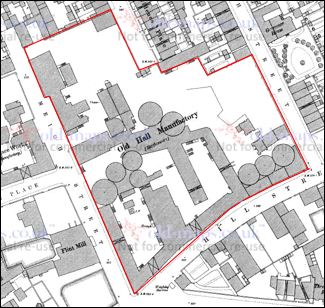
- more on the Old Hall Works -
Questions, comments, contributions? email: Steve Birks
|
Page created 31 May 2022 Last Updated 26 August 2025: Examples of ware updated |