|
|
||
|
|
 |
|

|
English Potters’ Marks Featuring the Royal Arms |
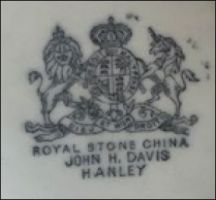
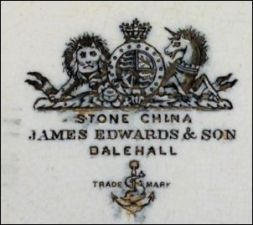
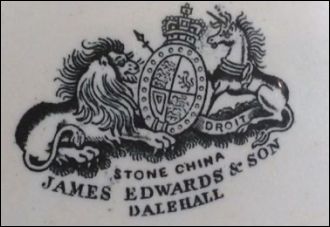
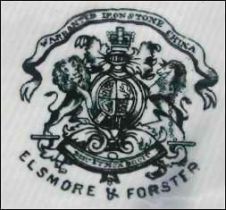
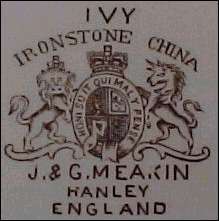
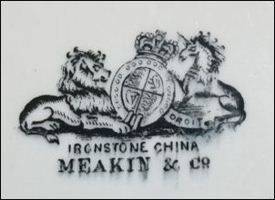
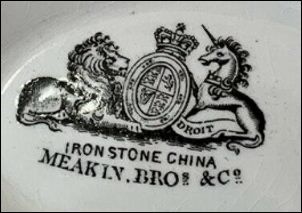
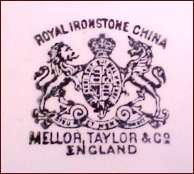
English potters made widespread use of the Royal Arms within their factory marks, both as a symbol of prestige and as a practical device for identification and dating.
A key distinction lies in the form of the Arms themselves. Before 1837, the design incorporated an escutcheon (small central shield) representing Hanover;
following the accession of Queen Victoria, this element was removed, and the simplified form has remained in use ever since.
This change provides a useful guide for dating, although it was not always applied consistently in practice.
Some manufacturers continued to use earlier versions of the Arms well after 1837.
For example, Henry Alcock & Co (active 1861–1909) employed the pre-1837 form, while Robinson & Dale (active 1841–1844) also used the earlier style.
Such cases demonstrate that the design of the Arms alone cannot be relied upon as definitive evidence of date.
Equally important is the accompanying wording. Terms such as “Warranted,” “Royal,” or “By Royal Letters Patent” often reveal more about marketing strategy than genuine royal patronage.
The examples that follow illustrate how potters adapted the Royal Arms to convey quality, authority, and commercial appeal.
Pre-1837 Royal Arms in Pottery Marks
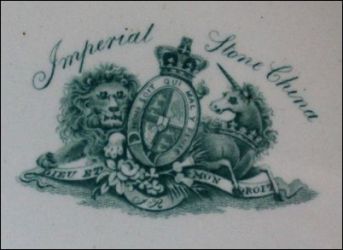
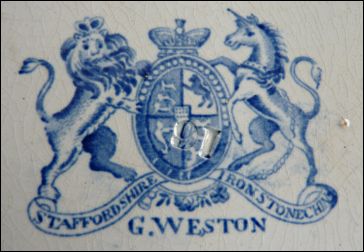
Before 1837, the Royal Arms used on English pottery included a small central shield bearing the arms of Hanover. For collectors, this feature is one of the quickest ways to recognise an early mark, generally indicating production in the late eighteenth or early nineteenth century.
These Arms appear across a wide range of wares—transfer-printed, painted, and impressed—and were used by many different manufacturers.
While the overall design is consistent, details such as the shape of the shield, the style of the lions, and any accompanying wording can vary considerably from one pottery to another.
Although the presence of the Hanoverian shield is a useful dating guide, it should not be taken in isolation. As shown elsewhere, some potters continued to use this earlier form after 1837, so it is always best considered alongside the maker’s name and other features of the mark.
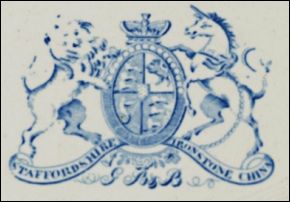
Staffordshire
Ironstone China
G B& B
operated c. 1828-31
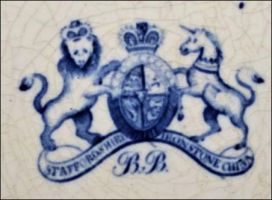
Staffordshire
Ironstone China
BBoperated c. 1831-43
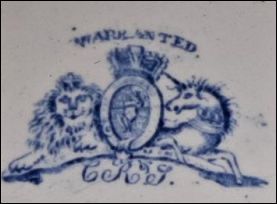
Warranted
CR&S
Chetham and Robinson operated 1822-37
Chetham, Robinson & Son operated 1837-41
so there was an operational overlap across the 1837 change in the arms
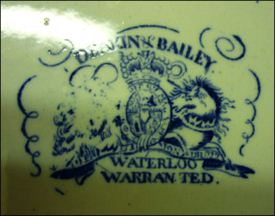
Deakin & Bailey
Waterloo
Warrantedoperated 1828-32
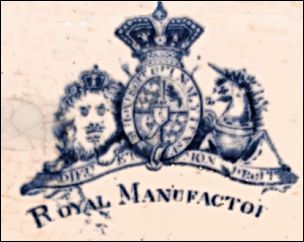
Royal Manufactoryoperated 1833-63
Although there is no makers name, this mark appears on a plate with the 'Spanish Beauties' pattern which is known to have been produced by James Deakin & Son.
|
impressed mark 'Elkin, Knight & Co' with crown above operated 1822-26 |
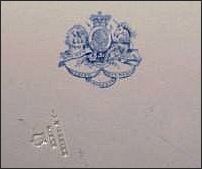
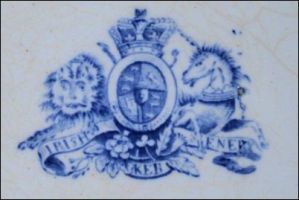
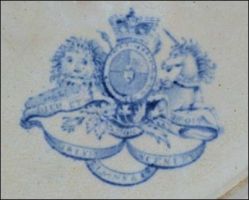
Elkin, Knight & Bridgwood operated 1827-40 |
operated 1827-40, concurrently with Elkin, Knight & Bridgwood |
|
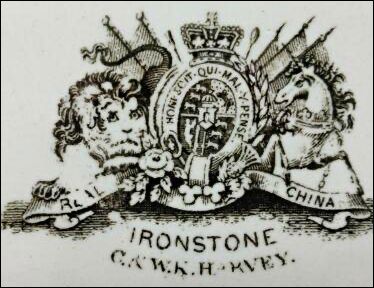
operated 1835-53 The presence of flags behind the Royal Arms in pottery marks is called a "Trophy of Arms" Their use, such as those in the mark of C. & W.K. Harvey, is a specific heraldic flourish used primarily for marketing and prestige, |
operated
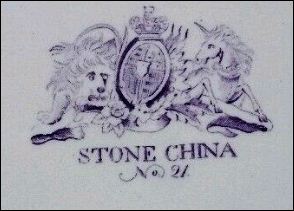
c. 1806-22 Most Hicks & Meigh marks didn't include a manufacturers name, just the words "Stone China" and a pattern number. The earliest firmly dated use of the British Royal Arms is that of Hicks & Meigh who used the arms from around 1806
|
|
|
|
|
operated c. 1834-38
|
|
|
operated c. 1830-55
|
operated 1796-1829
|

|
|
|
Post-1837 Royal Arms in Pottery Marks
|
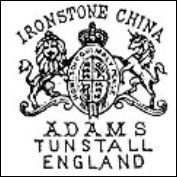
Ironstone China
Adams
Tunstall
England
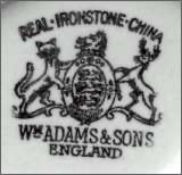
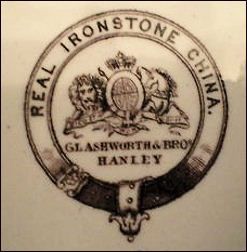
Real Ironstone China
Wm Adams & Sons
EnglandWilliam Adams operated from 1769 to 1966
marks incorporating the Royal Arms were not introduced until 1879
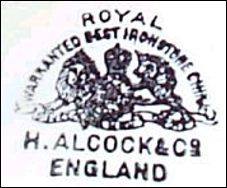
Royal
Warranted Best Ironstone China
H. Alcock & Co
England
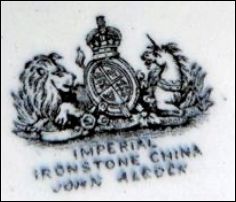
Imperial
Ironstone China
John Alcockoperated 1849-61
|
this mark appears with and without the manufacturers name |
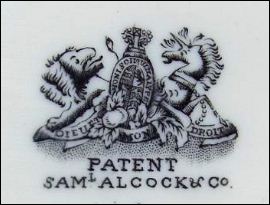
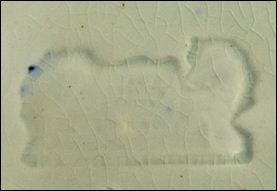
Samuel Alcock & Co |
|
operated 1849-61 |
|
|
operated 1862-1968 |
operated 1892-1941
|
|
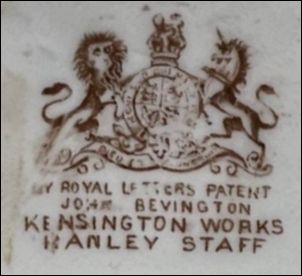
operated 1863-92 In the context of British pottery, the phrase "By Royal Letters Patent" indicates that a specific manufacturing process, material, or design used in that piece was legally protected by a patent granted by the British monarch. In Bevington's case, he likely chose a Patent because his "Stucco-Ware" involved a complex, textured surface that was a result of a specific manufacturing process Legal Monopoly: A patent granted the manufacturer exclusive rights to use a specific invention—such as a new type of durable clay (like Ironstone), a unique glaze, or a specialized decorating technique—for a set period.
|
|
operated 1857-64
|
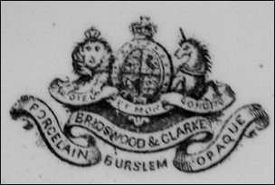
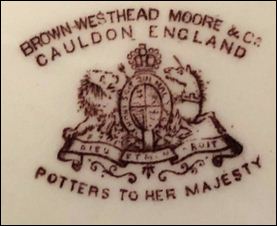
operated 1862-1904 "Potters to Her Majesty": In the late 19th century, this phrase was often used more loosely as a marketing title. While it might have been true that they once sold a set of plates to the palace, it did not carry the same legal weight as a warrant. |
|
operated 1875-92
|
operated 1864-92 |
|
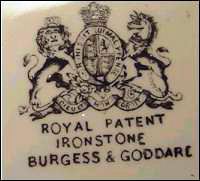
operated 1840s-1890s The Burgess & Goddard mark with "Royal Patent" is a classic example of 19th-century branding designed specifically for the export market, particularly the United States. Burgess & Goddard was primarily an export/import firm.
|
|
operated 1862-91 |
this mark is found on Willow ware which is probably
of modern production |
operated 1892-96
|
|
operated c. 1865-87 |
operated 1865-1916 |
operated 1855-69 |
|
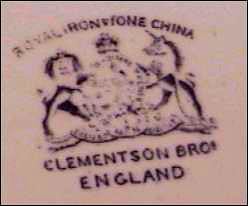
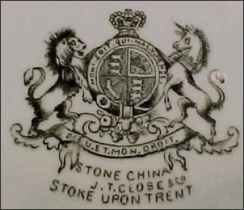
operated 1866-75 |
operated 1875-77 |
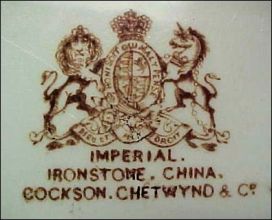
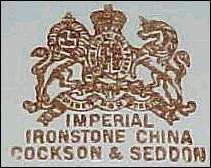
operated c. 1850-1904
|
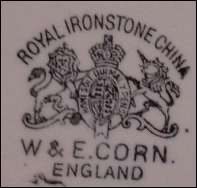
|
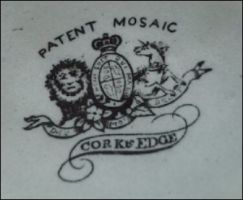
operated 1846-60 The "Patent Mosaic" mark found on pottery by Cork & Edge refers to a specific decorative process used by the firm - it was a "Borrowed" name it likely refers to a patent for inlaid tiles and pottery actually held by Richard Boote in 1843.
These items were often relief-moulded jugs or teapots and were produced at the Newport Pottery in Burslem, Staffordshire. While they were originally intended for more affordable markets, they were highly regarded for their "good taste" and even featured in major exhibitions like the Great Exhibition of 1851. |
|
operated 1793-1887 |
operated 1871-75 |
operated 1875-91 |
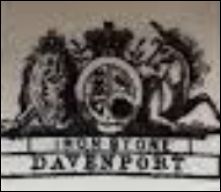
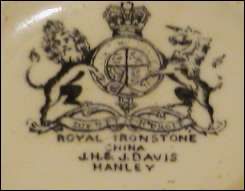
|
|
|
|
|
operated 1842-51 |
James
Edwards & Son
operated 1851-82 |
|

|
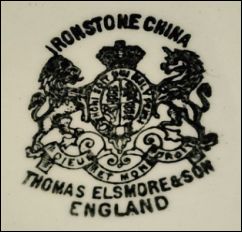
operated 1853-71 |
operated 1872-87 |
|
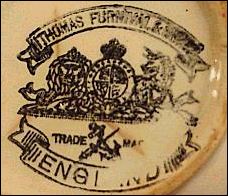
operated 1851-90 |
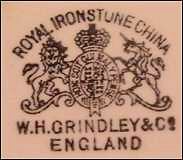
operated 1880-1991 |
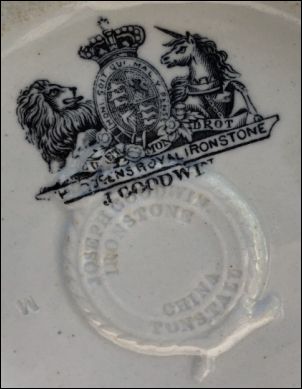
Joseph
Goodwin operated pre 1856-1861 |
|
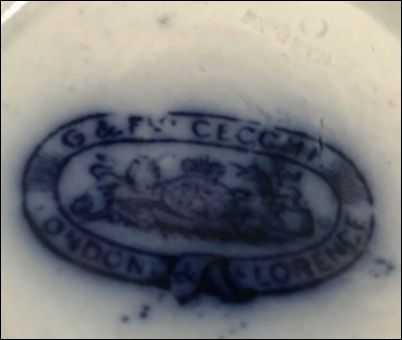
Cecchi were retailers/importers the
manufacturers were operated 1862-69
|
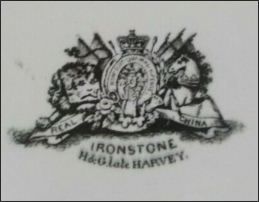
operated 1853-81
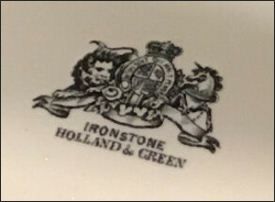
Holland & Green operated 1854-81 and therefore would normally have used the arms without the central small shield - however they continued the mark of C & W K Harvey which included the presence of flags behind the Royal Arms - called a "Trophy of Arms"
|
operated 1853-81 |
|
|
|
|
|
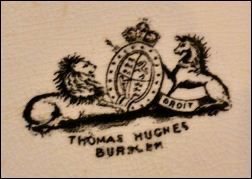
operated
c. 1855-94 |
||
|
|
|
|
|
operated 1883-2003 |
||
|
|
|
|
operated 1861-1957 |
|
|
operated 1897-c. 2008 |
operated 1867-71 |
operated 1871-75 |
|
operated 1860-70 |
operated 1843-55 |
|
operated around 1875 (or 1855) |
operated 1855-1981 |
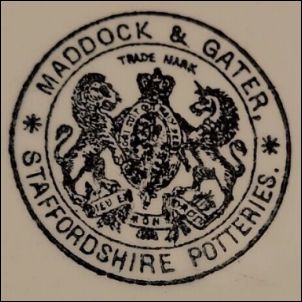
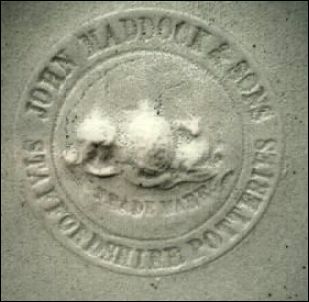
|
|
|
|
|
operated 1851-2000 |
||
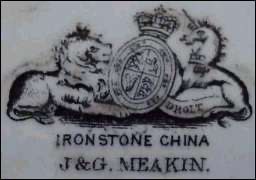
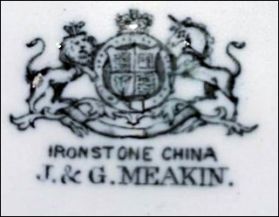
|
operated 1865-82 |
operated c.1865-c.1873 |
|
operated 1880-1903 |
printed
mark - usually accompanied by an impressed mark bearing the name |
|
|
|
operated 1845-58 |
|
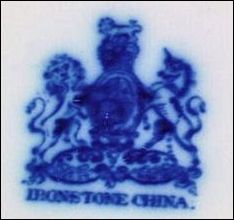
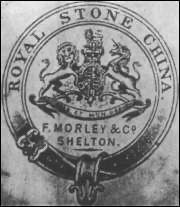
|
Oulsnam at the Soho Works, Tunstall (1867-c.1872) |
Oulsnam
& Sons in (c.1872-92) |
|
operated 1867-92 |
|
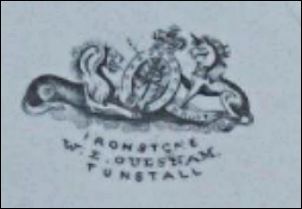
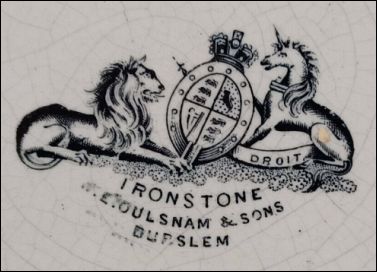
|
|
|
|
operated 1850-83 |
|
|
|
|
|
operated 1862-82 |
|
|
operated 1867-78 |
mark
incorporates the lion & unicorn operated 1834-54 |
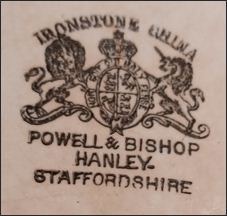
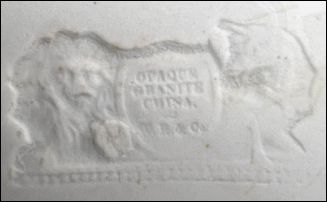
|
operated c.1860-c.1870 |
operated 1860-81 |
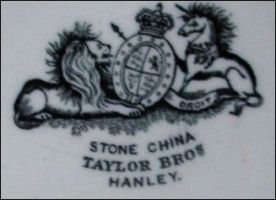

|
operated 1873-95 |
operated 1867-74 |
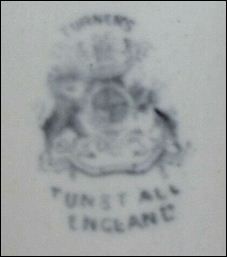
|
|
|
|
operated 1842-44 Godden - Encyclopaedia of British Pottery and Porcelain Marks |
|
|
operated 1851-1900 |
|
operated 1850-52 |
operated 1852-56 |
operated 1853-55
|
operated c. 1860 - ? |
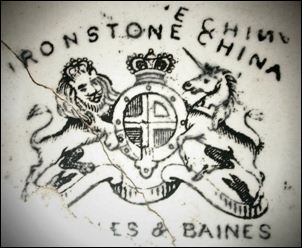
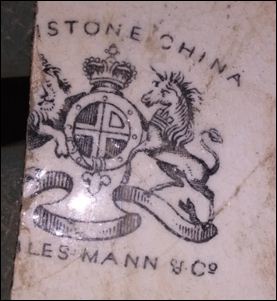
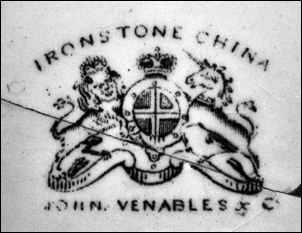
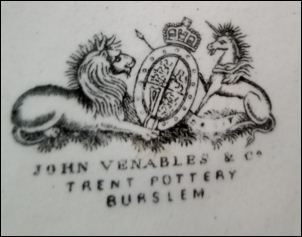
|
operated 1845-56 |
operated 1860-1965 |
operated 1886-1965 |
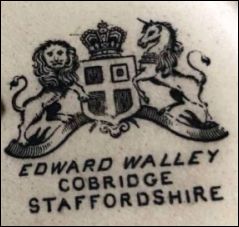
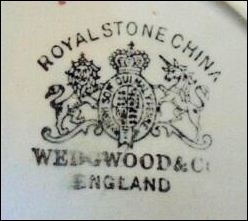
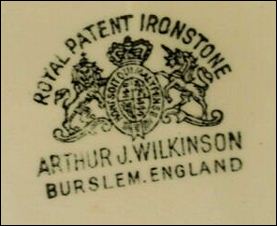
|
operated 1865-2005 |
operated 1871-72 |
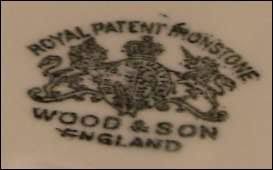
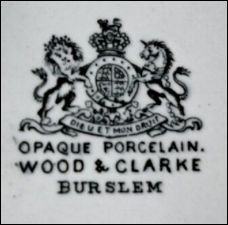
|
|
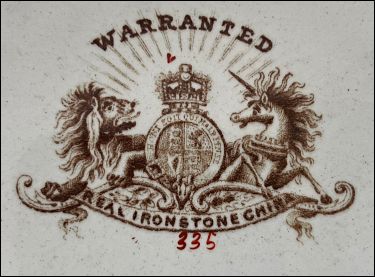 Warranted Real Ironstone China |
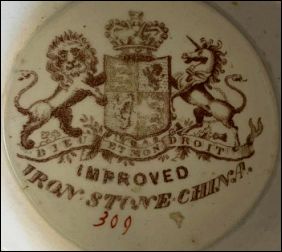 Improved Iron Stone China |
|
|
|||
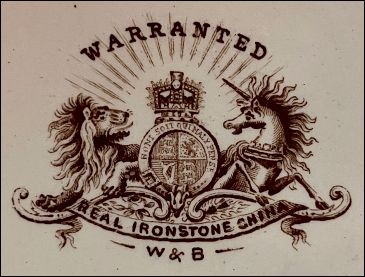
|
Persistence of Pre-1837 Arms After 1837
|
Warranted
Staffordshire
H A & Co
L
EnglandHenry Alcock & Co operated 1861-1909, however they used this pre 1837 version of the arms
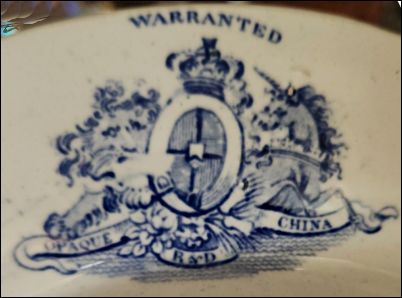
Warranted
Opaque China
R & D
Robinson & Dale operated 1841-1844, however they used this pre 1837 version of the arms

|
Ornamental Variants: Mantled and Embellished Arms
|
|
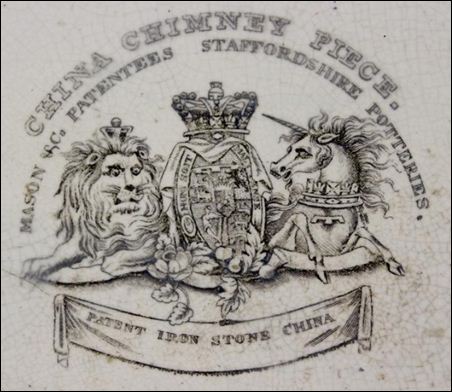
This ornate version of the Royal Arms, used by Mason & Co., illustrates how Staffordshire potters enhanced official symbols to convey prestige. The draped mantle beneath the crown echoes the royal pavilion of heraldry, reinforcing the status of Ironstone China, introduced under patent by Charles James Mason in 1813. |
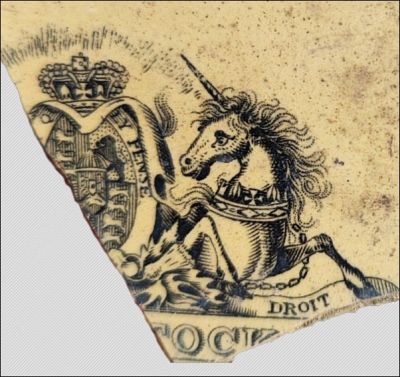
the letters 'TOCK' from the partial word might be part of a pattern name
Shard recovered (2024) from the Vistula River, Warsaw, Poland photo courtesy: Maxim Stetsiura |
|
|
|
Associated Royal Devices (Prince of Wales, Princess Victoria)
|
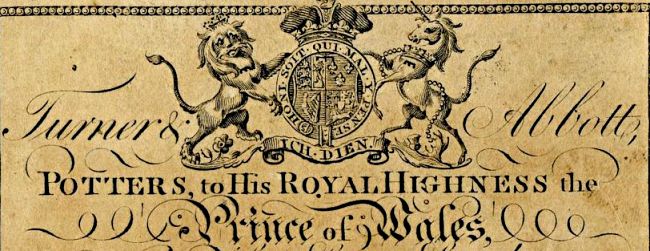
Turner & Abbott
Potters, to His Royal Highness the Prince of Wales
|
Turner & Abbott (operated c. 1780-1803) were the London based retail outlet for the potter John Turner of Lane End, Staffordshire Potteries. Godden (Encyclopaedia of British Pottery and Porcelain Marks) notes that John Turner used the Prince of Wales feathers as a mark from 1784 when he was appointed potter to the Prince of Wales. The Prince of Wales at this time was Prince George Augustus Frederick (the future King George IV), who held the title from his birth in 1762 until he ascended the throne in 1820. |
|
operated c. 1818-42 |
Operated 1819-29
|
|
|
|
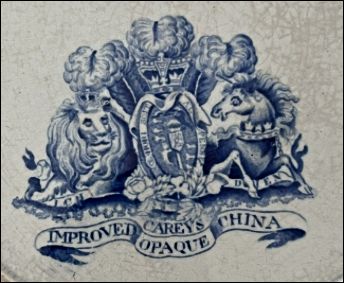
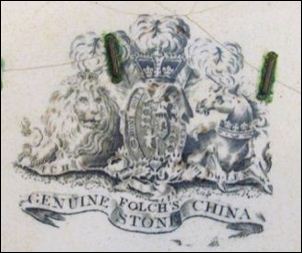
|
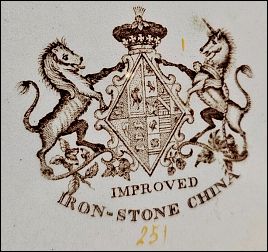
The complex arms in the backstamp are those of Princess Victoria of Saxe-Coburg-Saalfeld (the mother of Queen Victoria), in her maiden capacity. Together with the lion and unicorn of the Royal Arms of the United Kingdom reflecting her marriage to Prince Edward, Duke of Kent.
|
|
This section created 1 January 2003 All pages updated 29 April 2026 |